

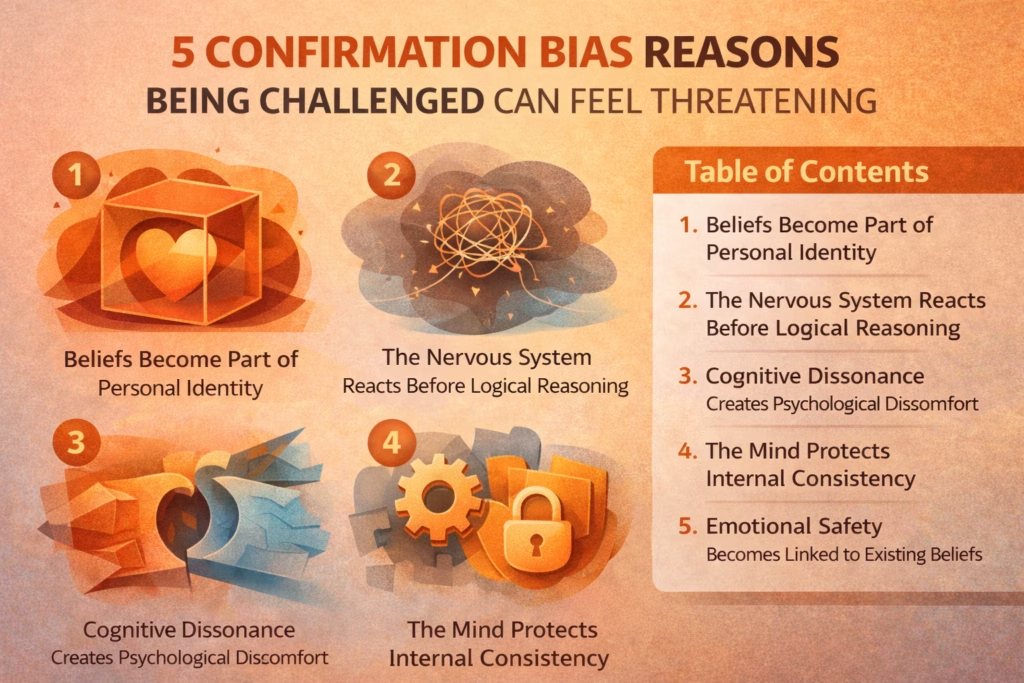
Table of Contents
- Beliefs Become Part of Personal Identity
- The Nervous System Reacts Before Logical Reasoning
- Cognitive Dissonance Creates Psychological Discomfort
- The Mind Protects Internal Consistency
- Emotional Safety Becomes Linked to Existing Beliefs
Confirmation bias helps many of us understand why disagreement can sometimes feel personal rather than informative. When beliefs guide how we interpret information, being challenged may trigger a defensive reaction before reasoning fully engages. When we recognize this pattern together, you and the people around you can approach conversations with more patience, curiosity, and mutual respect.
1. Beliefs Become Part of Personal Identity
Over time, certain beliefs become closely connected to how people see themselves. When a belief becomes part of identity, questioning it can feel similar to questioning the person who holds it. For example, someone who strongly identifies with a particular viewpoint may experience disagreement as personal criticism rather than a discussion about ideas.
When we understand this connection together, conversations can stay more supportive and respectful. Instead of feeling like a personal conflict, a discussion can remain a shared exploration of ideas where each person feels heard.
You can help guide conversations back toward understanding.
- Notice when a conversation shifts from discussing ideas to defending identity.
- Ask clarifying questions so you and others can better understand each perspective.
- Separate a person’s value from the belief being discussed.
2. The Nervous System Reacts Before Logical Reasoning
When beliefs feel connected to certainty or stability, the nervous system may respond before conscious reasoning engages. This automatic reaction can create tension or defensiveness even during calm discussions between people who want to understand each other. For example, someone may feel discomfort immediately when hearing a contradiction, even if the conversation later becomes constructive.
Recognizing this response can help you remain grounded in a discussion. When people understand that the reaction is a common human pattern, it becomes easier to pause and reconnect with thoughtful reasoning.
You can create space for reflection before responding.
- Pause briefly before responding during disagreement.
- Notice physical cues such as tension or the urge to react quickly.
- Allow reasoning to reconnect with your response.
3. Cognitive Dissonance Creates Psychological Discomfort
Cognitive dissonance occurs when new information conflicts with an existing belief. This internal conflict creates psychological discomfort that people naturally want to resolve. One common way people reduce that discomfort is by defending the original belief instead of adjusting it.
For example, someone encountering information that contradicts expectations may dismiss the information or reinterpret it in a way that preserves their current view. This response restores comfort but can also strengthen confirmation bias.
You can treat discomfort as a signal for reflection.
- Notice when new information creates internal discomfort.
- Treat that feeling as an opportunity to examine evidence more carefully.
- Consider alternative explanations before reinforcing an existing belief.
4. The Mind Protects Internal Consistency
The brain naturally prefers a stable and consistent understanding of the world. Changing a belief often requires adjusting other connected ideas, which can feel mentally disruptive. Because of this, the mind may focus on preserving coherence instead of revising long-held assumptions.
For example, if a belief has shaped many past interpretations, updating it may require reconsidering several related conclusions. Understanding this tendency together can help people approach belief change with patience rather than pressure.
You can give yourself time to process new perspectives.
- Reflect on new information instead of rushing to a conclusion.
- Identify which assumptions support a belief.
- Gradually integrate new perspectives when evidence suggests reconsideration.
5. Emotional Safety Becomes Linked to Existing Beliefs
Beliefs often provide a sense of certainty about how the world works. When those beliefs are challenged, uncertainty can increase, and that experience may feel uncomfortable. In these moments, defending a belief can restore a sense of emotional stability.
For example, someone may strongly support a familiar viewpoint because it offers a reliable explanation for events. When people recognize how belief and emotional safety connect, conversations can become more empathetic and supportive.
You can allow curiosity to remain present even when certainty feels reassuring.
- Notice when certainty provides emotional reassurance.
- Allow uncertainty to exist alongside curiosity.
- Use disagreement as a shared opportunity to understand additional perspectives.
Confirmation bias influences both the information people notice and how people respond when beliefs are challenged. Identity connections, nervous system reactions, cognitive dissonance, and the mind’s preference for internal consistency all contribute to these responses. When we understand these patterns together, you and others can support conversations that remain thoughtful, respectful, and open to learning.