

Exploring How Our Minds Filter Experience Together
Each day, you and I move through a world filled with more information than any mind can consciously process. To help us navigate this complexity, our brains rely on familiar beliefs, experiences, and expectations that gently guide what we notice and what feels meaningful.
One pattern that often shapes this process is confirmation bias. It describes how we naturally notice and remember information that aligns with what we already believe, while other details receive less attention. This is not a flaw in you or anyone else. It is a shared human tendency that helps the mind stay efficient.
When we explore this pattern together, we begin to see how perception is something we co-create with our beliefs, experiences, and communities. With a little awareness and care, you and I can approach information with more curiosity, patience, and trust.
In this guide, we walk through several shared insights:
- How confirmation bias gently filters what you and I notice.
- Why challenges to beliefs can sometimes feel personal in conversations.
- Where this pattern appears in relationships, work, health, and online spaces.
- How digital systems and AI can reflect and reinforce familiar viewpoints.
As we explore these ideas together, we build a more supportive relationship with how our minds interpret the world around us.
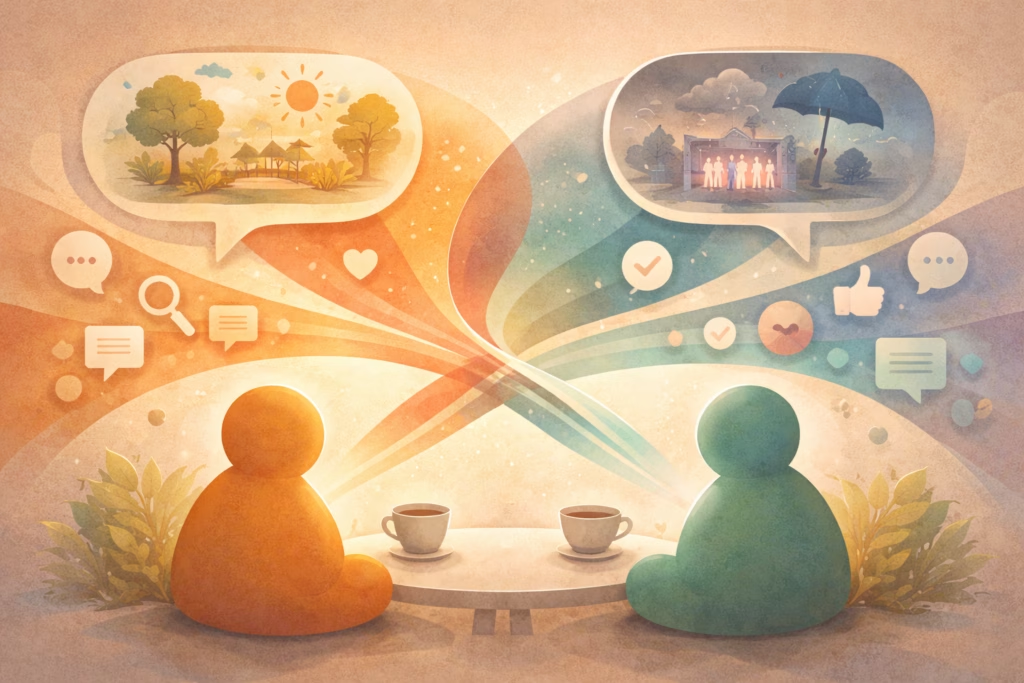
How Our Minds and Beliefs Work Together to Shape Experience
The sections below invite you to explore how confirmation bias develops, how it shows up in everyday interactions, and how modern technology can echo the beliefs we already carry. When we look at these patterns with curiosity and care, we create space for reflection, shared learning, and thoughtful dialogue.
How Our Minds Use Beliefs to Guide What We Notice
Confirmation bias is the tendency for people to notice, interpret, and remember information that aligns with their existing beliefs. This process helps the brain stay organized and efficient.
Although your senses gather enormous amounts of information each moment, only a small portion reaches conscious awareness. To help manage this flow, the mind uses mental filters shaped by past experiences, expectations, and emotional meaning.
Once a belief becomes familiar, supporting details often stand out more easily. At the same time, information that feels less aligned may receive less attention. Over time, this process can gently reinforce the perspectives that already feel familiar to you.
Why Belief Challenges Can Feel Personal in Conversations
Beliefs often connect with identity, relationships, and a sense of belonging. Because of this connection, disagreements can sometimes feel emotionally meaningful rather than purely informational.
When a belief feels tied to who we are or to the communities we value, the nervous system may respond protectively before reflective reasoning has time to engage. This is a common human experience, and it can appear in many conversations.
Several shared dynamics often contribute to this experience:
- Identity connection: Beliefs can reflect how people see themselves and their role within a community.
- Emotional investment: Long-held ideas often carry personal meaning and memories.
- Mental harmony: When new information conflicts with existing beliefs, the mind may seek ways to restore internal balance.
- Social belonging: Shared viewpoints often help people feel connected with others.
- Cognitive ease: Familiar ideas require less effort for the brain to maintain.
When you and others recognize these dynamics, conversations can move toward more supportive listening and thoughtful exchange.
How You Can Notice Confirmation Bias in Everyday Life
Confirmation bias often appears in subtle ways throughout daily life. When you become aware of these patterns, you gain a gentle opportunity to pause and reflect with curiosity.
- In relationships: Expectations can guide what behaviors we notice and remember. When we expect kindness, supportive moments may stand out more clearly. When we expect tension, those signals can become more visible.
- In health and personal choices: Initial impressions often guide which advice or evidence feels trustworthy. Over time, confirming information may feel more convincing.
- In workplaces and teams: Shared assumptions sometimes guide group decisions. When teams stay open to diverse perspectives, collaboration often becomes stronger and more balanced.
- In online environments: Digital platforms frequently recommend content similar to what users previously engaged with. Over time, this pattern can create the sense that certain views are widely shared, even when exposure has simply been filtered.
How Technology and AI Reflect the Patterns We Engage With
Many digital systems are designed to learn from user behavior. Recommendation engines, search platforms, and social media feeds analyze engagement patterns so they can present information that feels relevant and familiar.
Because these systems learn from past interactions, they often present content that resembles what users previously explored. In this way, digital environments sometimes mirror the preferences and beliefs that people already carry.
Artificial intelligence models can also reflect patterns found within the data used during training. When historical assumptions appear in datasets, those patterns may be echoed in future outputs.
By recognizing how technology reflects our behavior, you and others can engage with digital spaces in a more thoughtful and balanced way.

FAQs
Confirmation bias refers to the tendency for people to notice and remember information that supports their existing beliefs while giving less attention to conflicting evidence.
It influences which details stand out and how events are interpreted. Information that aligns with beliefs often feels more visible and meaningful.
Beliefs often connect with identity, relationships, and community. When those beliefs are questioned, emotional responses may appear before reflective thinking engages.
Research suggests that only a small portion of the information our brains process becomes consciously noticeable.
Many recommendation systems show users content similar to what they have engaged with before, which can reinforce existing viewpoints over time.
Creating Space for Curiosity Beyond Automatic Filters
When you and I recognize how confirmation bias works, we gain an opportunity to pause before accepting our first interpretation. That pause helps create room for curiosity, reflection, and respectful conversation.
Together, this awareness supports stronger dialogue, deeper learning, and more thoughtful connections within our communities.
If you would like to explore more about how beliefs and perception interact, these resources may offer helpful guidance:
If this topic resonates with you, you might consider continuing the conversation with others who are also curious about how our shared human thinking patterns shape the way we experience the world.