
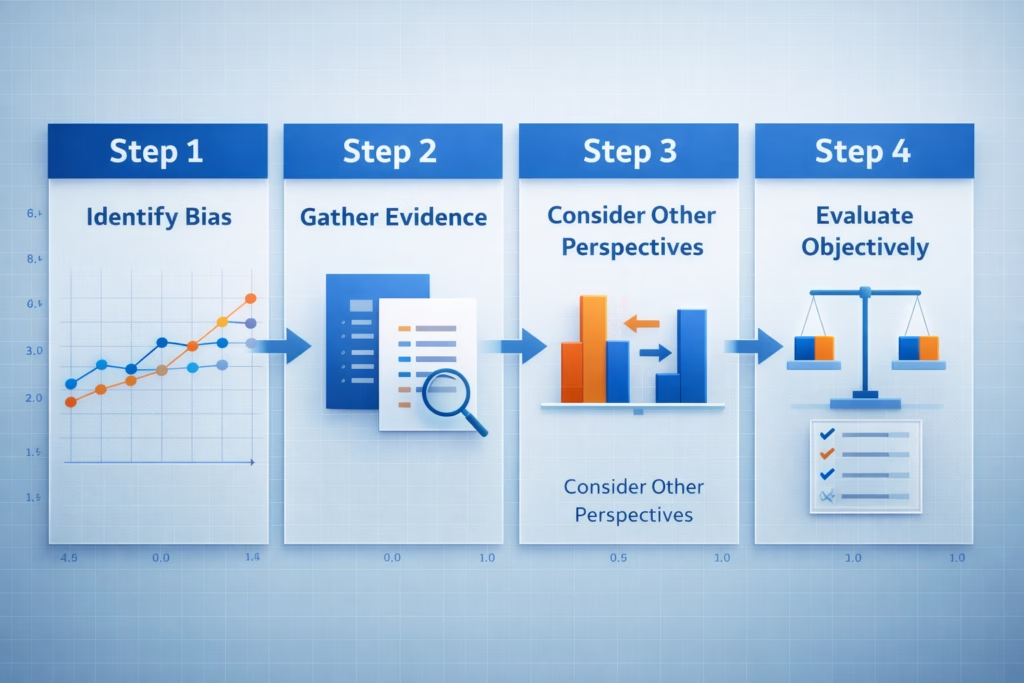
Confirmation bias shapes what information receives attention, trust, and recall. Because less than one percent of processed information reaches conscious awareness, belief structures influence perception across relationships, health decisions, workplace evaluations, and digital environments. Unexamined expectations can narrow interpretation and reinforce prior conclusions. A structured, step-by-step review process improves analytical clarity and supports balanced decision-making across these domains.

1: Document Selective Attention in Relationships
Identify how expectations influence interpretation during interpersonal exchanges. When support is anticipated, encouraging behaviors receive emphasis, while neutral or indifferent actions may receive limited attention. Conversely, when criticism is expected, neutral statements may be interpreted as confirming negative assumptions.
2: Evaluate Health Assumptions Before Gathering Evidence
Clarify the initial conclusion formed about a symptom, diagnosis, or treatment. Early interpretations often restrict which articles, studies, or professional opinions appear credible. Information aligned with the original assumption may receive greater weight, while alternative explanations may be discounted.
3: Apply Objective Criteria in Workplace Evaluations
Define measurable performance indicators before conducting an assessment. Expectations regarding competence influence how successes and mistakes are interpreted within professional reviews. Minor errors may appear amplified when negative assumptions shape the evaluative framework.
4: Test Online Feeds for Reinforcement Patterns
Analyze the dominant themes within a news or social media feed. Engagement-based systems prioritize content aligned with prior clicks and watch time, which can generate reinforcing informational loops. These patterns may resemble consensus while limiting exposure to varied perspectives.
Build Structured Awareness to Reduce Automatic Belief Reinforcement
Select one life domain and document assumptions for seven days using a consistent format. Record confirming and contradicting evidence before forming conclusions. Review the documentation to identify recurring interpretive patterns.