

Table of Contents
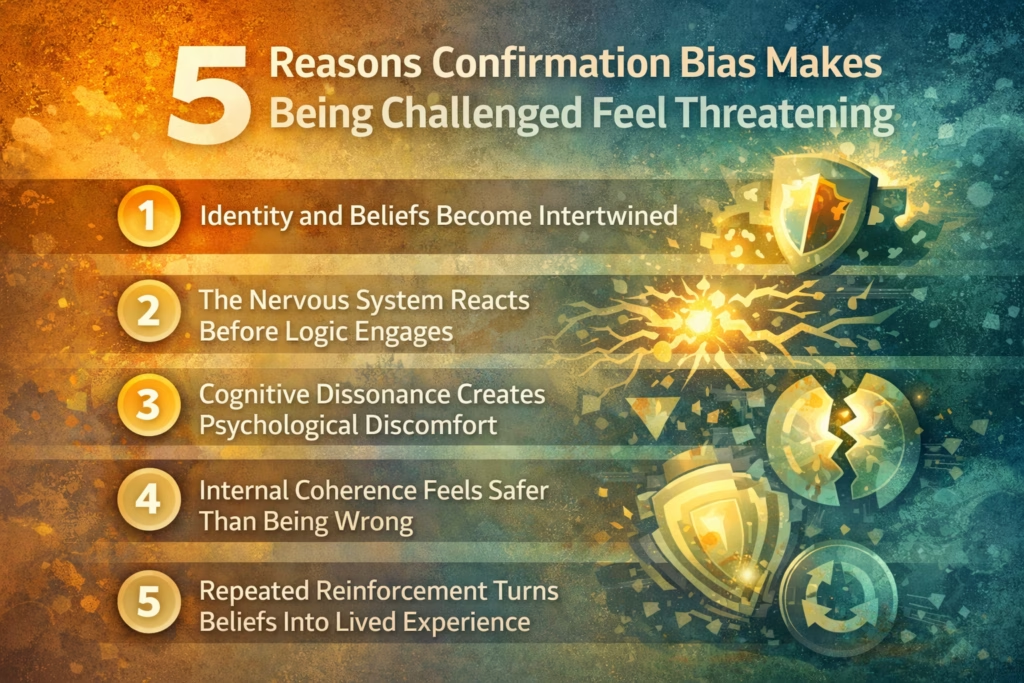
- Identity and Beliefs Become Intertwined
- The Nervous System Reacts Before Logic Engages
- Cognitive Dissonance Creates Psychological Discomfort
- Internal Coherence Feels Safer Than Being Wrong
- Repeated Reinforcement Turns Beliefs Into Lived Experience
When someone challenges what I believe, I feel it instantly. I get tense, defensive, sometimes even angry before I fully process their words. Confirmation bias makes disagreement feel personal, and once I see how it works inside me, I can respond with more awareness instead of pure reaction.
1. Identity and Beliefs Become Intertwined
I don’t just hold beliefs; I attach to them. Confirmation bias keeps reinforcing what I already think, and over time my opinions feel like part of my identity. When someone disagrees, I can feel rejected or exposed instead of simply challenged. For example, if a belief connects to my emotional safety, contradictory evidence makes me anxious fast. When I remind myself that a belief is not my entire self, I create space to stay in the conversation without feeling personally attacked.
- Beliefs start to feel like identity.
- Disagreement feels like rejection.
- Separating self from opinion reduces defensiveness.
2. The Nervous System Reacts Before Logic Engages
When my beliefs are challenged, my body reacts before my reasoning does. I feel tightness in my chest or frustration rising, and it can feel threatening even if no one is attacking me. For instance, I may want to shut the conversation down before I fully understand the other person’s point. By pausing and noticing my physical reaction first, I give myself time to think instead of reacting automatically.
- Physical tension can appear immediately.
- Frustration may rise before explanation.
- Pausing helps logic catch up.
3. Cognitive Dissonance Creates Psychological Discomfort
Cognitive dissonance is the discomfort I feel when new information clashes with what I already believe. Instead of adjusting my view, I often feel pulled to defend it because that tension feels awful. For example, I may focus only on details that support my original stance and dismiss what contradicts me. When I treat that discomfort as a signal rather than a threat, I can evaluate the information more thoughtfully.
- Conflicting information creates tension.
- Defensiveness reduces discomfort short term.
- Awareness allows more balanced evaluation.
4. Internal Coherence Feels Safer Than Being Wrong
I crave consistency in my thinking because it makes me feel stable. When my beliefs line up, I feel secure; when they don’t, I feel unsettled and anxious. Changing a long-held belief can mean reinterpreting past experiences, which feels destabilizing. By accepting that temporary uncertainty is part of growth, I can tolerate disagreement without immediately rejecting it.
- Consistency feels safe.
- Uncertainty feels destabilizing.
- Growth requires tolerating discomfort.
5. Repeated Reinforcement Turns Beliefs Into Lived Experience
When I repeatedly see information that confirms what I already think, my belief strengthens and starts to feel like obvious reality. Supporting details stand out while contradictory evidence fades into the background. For example, if I surround myself with people who share my views, disagreement can feel unreasonable or even upsetting. By recognizing these reinforcement patterns, I reduce my automatic defensiveness and respond more intentionally.
- Repetition strengthens belief.
- Aligned environments amplify certainty.
- Awareness reduces emotional reactivity.
Confirmation bias makes being challenged feel threatening because my beliefs tie into my identity, my sense of safety, and my need for internal consistency. When I notice anxiety or anger during disagreement, I see that my reaction often comes from discomfort rather than objective evaluation. That awareness changes how I respond.
The next time disagreement feels personal, pause and identify which of these five mechanisms is active. Notice your physical reaction, name the discomfort, and slow down before responding.