
Everything You Need to Know About How Beliefs Shape Your Reality
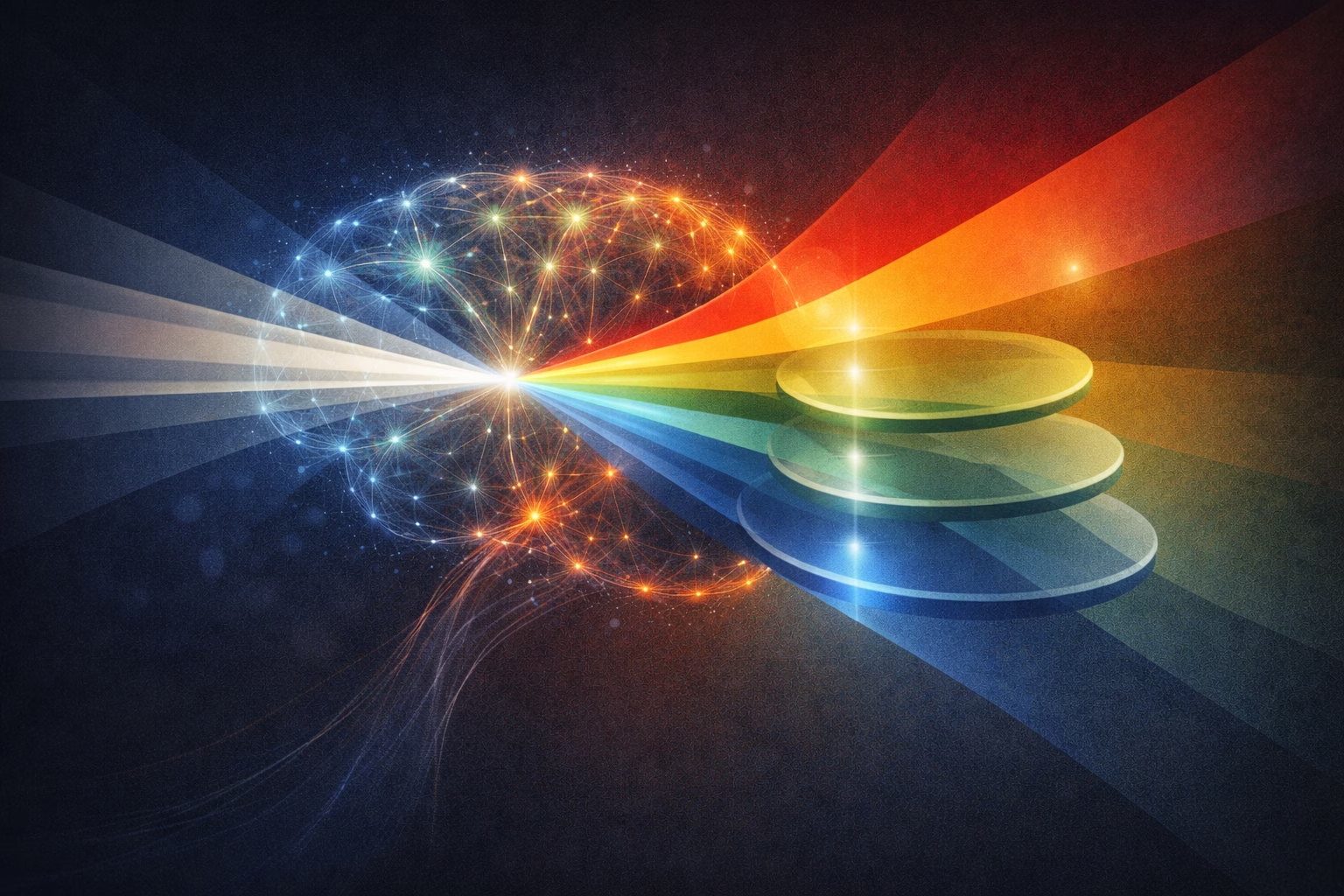
Confirmation bias is the mind’s tendency to favor information that supports existing beliefs while filtering out what contradicts them. Because conscious awareness processes only a tiny fraction of available information, beliefs act as filters that determine what feels true, relevant, and important. Understanding this mechanism helps you recognize how perception is shaped before you even realize it.
- What confirmation bias is and how it filters perception.
- Why belief challenges feel threatening or painful.
- Where confirmation bias shows up in daily life.
- How technology and AI reinforce belief loops.
What Is Confirmation Bias and How Does the Brain Filter Reality?
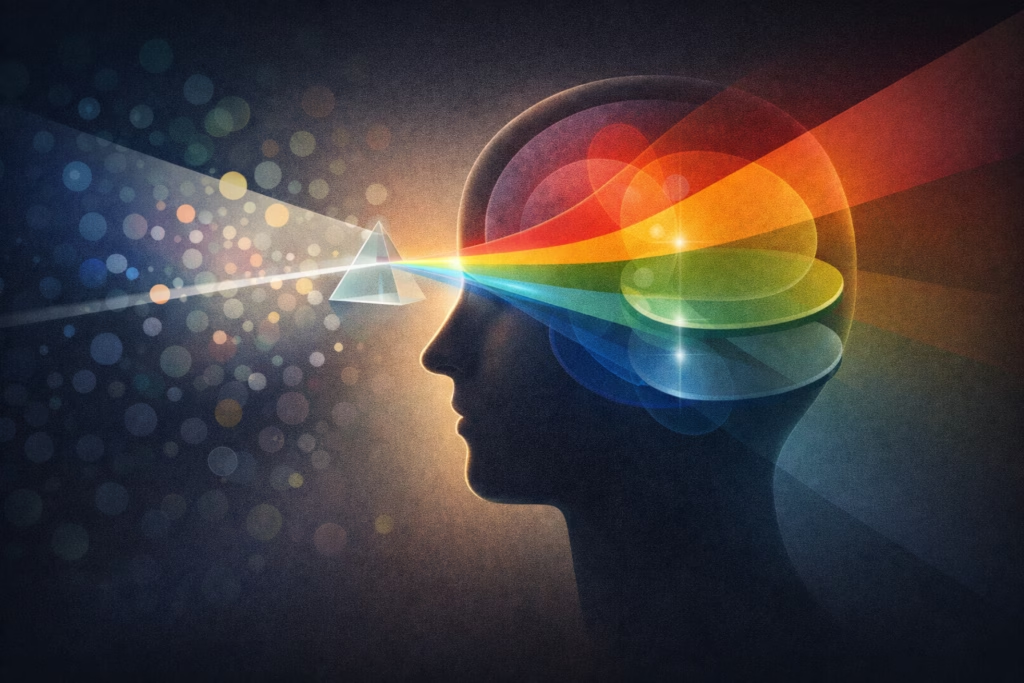
Confirmation bias is the tendency to seek, interpret, and remember information in ways that support existing beliefs. Although the brain processes vast amounts of information each second, less than one percent reaches conscious awareness. To remain efficient, perception is filtered through expectations, past experiences, and emotional relevance. Once a belief forms, confirming details stand out while contradictory evidence fades, creating a reinforcing feedback loop.
Understanding Confirmation Bias and How the Brain Filters Reality
5 Reasons Why Confirmation Bias Makes Being Challenged Feel Threatening
When beliefs connect to identity or emotional safety, disagreement can feel threatening rather than informative. The nervous system may react before logical reasoning engages, making contradiction feel painful or personal. Cognitive dissonance creates discomfort that people often resolve by defending existing beliefs instead of revising them. In these moments, internal coherence is prioritized over objective accuracy.
Top 5 Reasons Why Confirmation Bias Makes Being Challenged Feel Threatening
How-To Identify Confirmation Bias in Relationships, Health, Work, and Online Feeds
Confirmation bias shapes daily experiences across multiple areas of life. In relationships, expectations guide which behaviors are noticed and remembered. In health and work decisions, early impressions narrow what evidence feels credible. Online platforms amplify content aligned with existing views, creating reinforcing loops that feel like consensus rather than filtered exposure.
How-To Identify Confirmation Bias in Relationships, Health, Work, and Online Feeds
Beginner’s Guide to Confirmation Bias in Technology and AI: How Algorithms Reflect Your Beliefs
Technology operationalizes confirmation bias by embedding patterns from historical data and engagement signals. Recommendation systems learn user preferences and repeatedly present similar content, narrowing exposure over time. AI systems can unintentionally encode human assumptions through training data and optimization goals. When beliefs are mirrored back through digital systems, reinforcement can appear neutral rather than biased.
Beginner’s Guide to Confirmation Bias in Technology and AI: How Algorithms Reflect Your Beliefs
FAQs
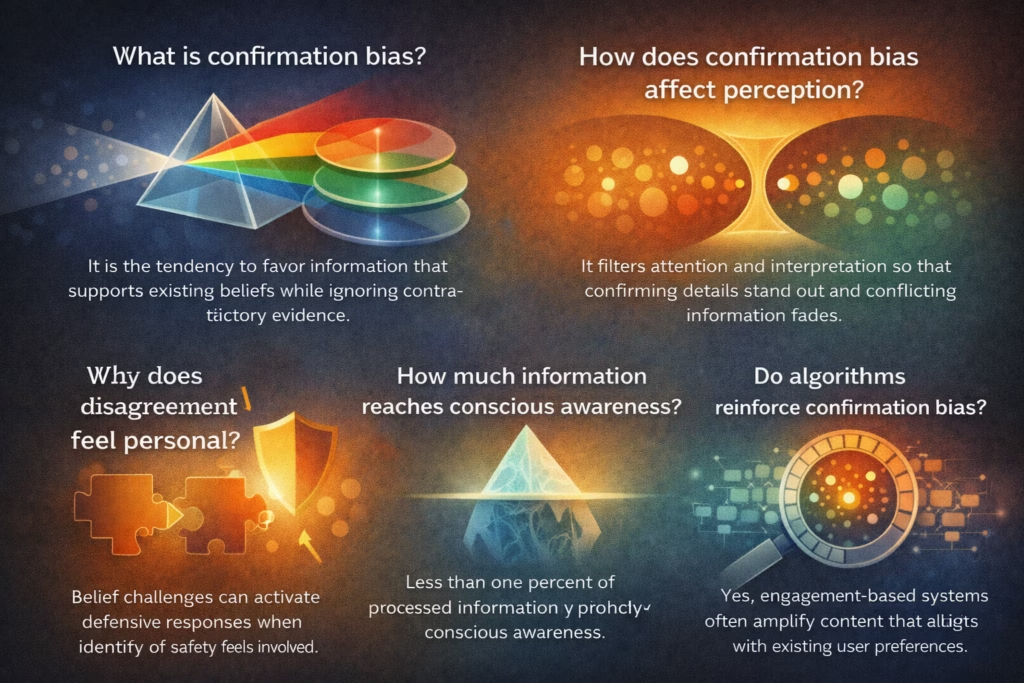
It is the tendency to favor information that supports existing beliefs while ignoring contradictory evidence.
It filters attention and interpretation so that confirming details stand out and conflicting information fades.
Belief challenges can activate defensive responses when identity or safety feels involved.
Less than one percent of processed information typically reaches conscious awareness.
Yes, engagement-based systems often amplify content that aligns with existing user preferences.
Seeing Beyond Automatic Mental Filters
Understanding confirmation bias allows you to pause and question automatic interpretations. By recognizing how beliefs filter perception, you create space for more intentional awareness and informed decision-making.