
Understanding Confirmation Bias as a Perceptual Filter
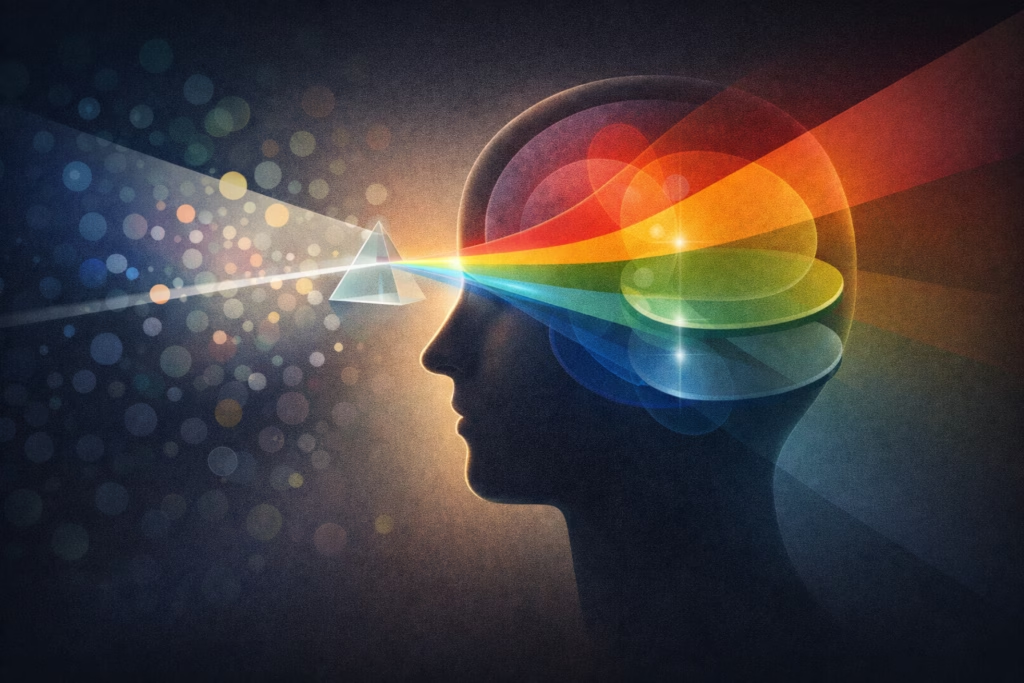
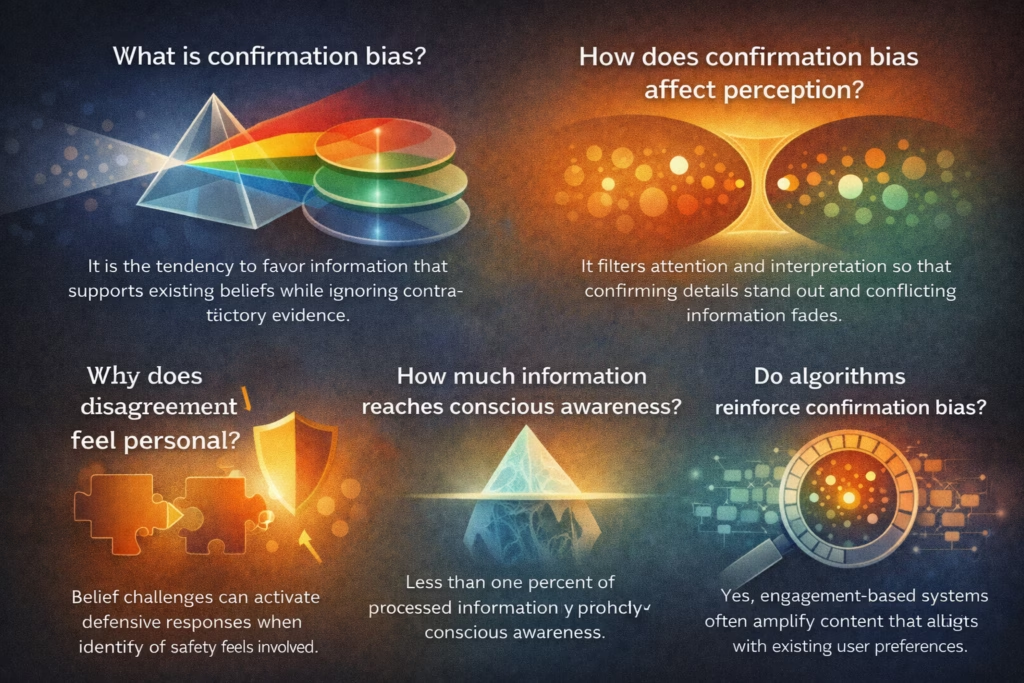
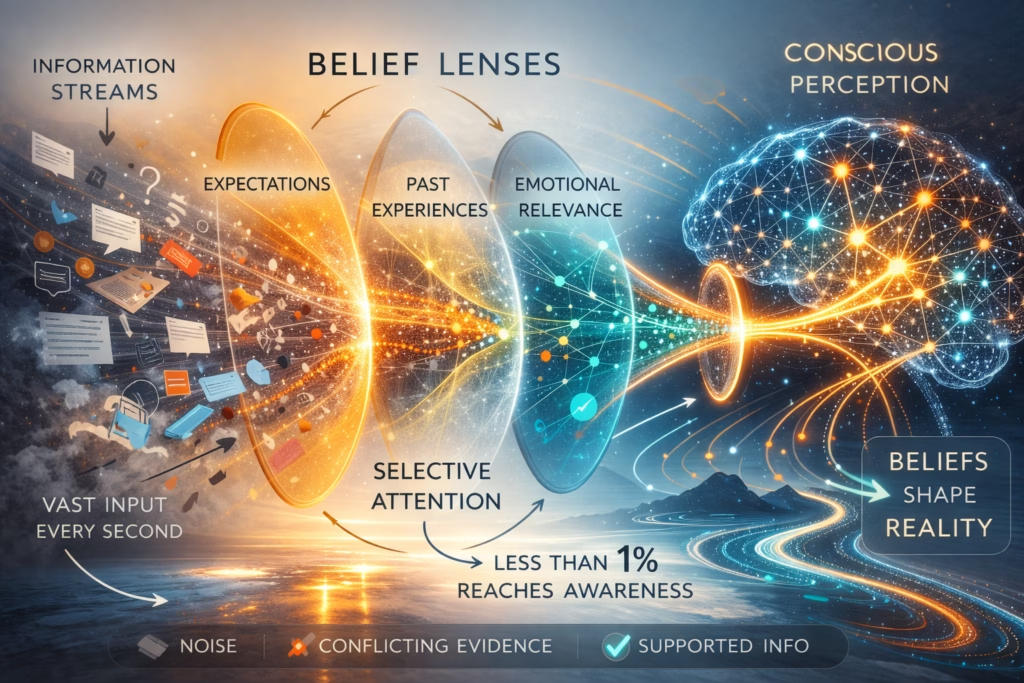
Confirmation bias describes the tendency to seek, interpret, and remember information in ways that support existing beliefs while minimizing contradictory evidence. Although the brain processes vast amounts of information each second, less than one percent reaches conscious awareness, which means perception depends on structured filtration. Expectations, past experiences, and emotional relevance provide the organizing principle that determines what enters awareness. As a result, beliefs function as cognitive lenses that shape what feels credible and significant before reflective reasoning fully engages.
Why This Cognitive Filter Shapes Everyday Experience
When we understand confirmation bias as an efficiency mechanism rather than a flaw, we recognize why the same facts can produce different conclusions. Confirming details stand out while inconsistencies recede, creating a reinforcing pattern that strengthens beliefs over time. Because attention and memory align with prior assumptions, perception gradually stabilizes around what already feels coherent. Recognizing this causal structure clarifies how deliberate evaluation can replace automatic acceptance and support more balanced communication and decision-making.
Consider someone who believes a coworker is unreliable. Missed deadlines may immediately register as meaningful, while completed tasks receive less cognitive emphasis. The expectation guides attention and interpretation, which means aligned evidence accumulates more weight in memory. Over time, the repeated pattern produces a perception that feels objective and self-evident. This example reveals how confirmation bias participates in constructing lived experience through patterned selection.
- Selective Attention
Selective attention determines which fraction of processed information enters conscious awareness. Since less than one percent of incoming data becomes conscious, the mind prioritizes material in alignment with existing beliefs and emotional relevance. When reading an article, a person may focus on statements that confirm their view while skimming opposing arguments, revealing how expectation directs perception. In practice, intentionally noticing overlooked details broadens contextual understanding and interrupts automatic filtering. - Interpretation Patterns
Interpretation patterns influence how ambiguous information is understood once it is perceived. When situations lack clarity, expectations provide a framework for meaning-making, often outside deliberate awareness. A neutral comment may be interpreted as supportive or critical depending on prior assumptions, which demonstrates how cognition fills uncertainty through established narratives. Pausing to consider multiple explanations clarifies the interpretive process and reduces automatic bias. - Memory Reinforcement
Memory processes favor information that confirms established beliefs, reinforcing internal consistency over time. Confirming events are recalled more readily, while contradictory experiences fade, therefore strengthening perceived accuracy. For example, remembering only instances that validate an opinion can create confidence that reflects selective recall rather than comprehensive evaluation. Actively reviewing both supporting and opposing evidence restores proportion and deepens understanding.
How Confirmation Bias Builds a Convincing Personal Reality
- Belief Formation Through Repetition
Beliefs develop through repeated exposure, accumulated experiences, and emotional significance, gradually becoming reference points for evaluating new information. Once formed, they organize perception by categorizing incoming data within an existing structure. Repeated engagement with similar viewpoints can make those perspectives feel widely accepted, which means exposure patterns influence perceived consensus. Seeking varied sources expands informational context and weakens automatic reinforcement. - Emotional Relevance and Identity Connection
When beliefs connect to identity or emotional safety, confirming information produces validation while contradictory evidence generates discomfort. This emotional activation often occurs before reflective reasoning engages, revealing the integration of affect and cognition. Disagreement may therefore feel personal even when it concerns information rather than character. Recognizing this response creates space for measured reflection instead of immediate defensiveness. - Reinforcing Feedback Loops
Each cycle of noticing, interpreting, and remembering confirming evidence strengthens the original belief structure. Over time, this reinforcing loop stabilizes perception and makes constructed interpretations feel enduring and objective. Repeated engagement with aligned perspectives can create a sense of consensus that reflects filtered exposure rather than comprehensive representation. Intentionally engaging with differing viewpoints interrupts this loop and supports more integrative understanding.
Seeing Beyond Automatic Mental Filters
Confirmation bias functions as the brain’s efficiency mechanism, filtering vast information through existing beliefs while allowing less than one percent to reach awareness. Through selective attention, interpretation patterns, and memory reinforcement, beliefs shape what feels true within a given context. Recognizing these principles reveals the patterned construction of perception, therefore supporting more intentional awareness and informed decision-making.
For deeper psychological context, explore Britannica’s overview of confirmation bias and research resources from the American Psychological Association.