
Tag: Why It Matters
Articles that establish relevance and significance — connecting a topic to broader implications and real-world impact. Optimized for ‘why is X important’ queries.
-

Shared Psychosis: AI, Social Media, and Belief
Shared Psychosis in Modern Society: AI, Social Media, and Belief Psychosis in modern society had become more than a private clinical concern. It had become a shared story about families, friends, technology, and the fragile ways people had tested reality together. A son, sister, parent, or close friend might have struggled with fear, hidden meanings,…
-

When a Third Person Was Brought Into Conflict
Psychological Triangulation: When a Third Person Was Brought Into Conflict Psychological triangulation had often begun in quiet moments between two people who found it hard to speak directly. A disagreement lingered, tension built, and instead of turning toward each other, one person reached outward. A third person was brought in, and what had started as…
-

How Shared Data and Public Tools Helped Communities
World Resources Institute: How Shared Data and Public Tools Helped Communities Understand a Changing World The World Resources Institute entered public life through problems that had already been linked in families, neighborhoods, and institutions. In one place, water stress had touched crops, health, and power. In another, forest loss had unsettled livelihoods, biodiversity, and carbon…
-
Institute for Justice Mattered to Families, Rights, and Everyday Life
Why the Institute for Justice Mattered to Families, Rights, and Everyday Life The Institute for Justice entered public life through stories that rarely began in legal abstraction. More often, a parent, a homeowner, a shop owner, or a working family had faced a government action that changed the course of ordinary life and left fear,…
-

What One Stranded Seal Taught Communities About Ocean Health
The Marine Mammal Center and the Bigger Story Communities Shared About Ocean Health Along the California coast and across Hawaii, The Marine Mammal Center had come to represent more than a hospital for animals in distress. Its work had unfolded inside a larger shared story, where a stranded seal or sea lion often drew together…
-

Community-Centered Guide to the National Women’s Law Center
A Caring, Community-Centered Guide to the National Women’s Law Center: How Gender Justice Support Can Help You, Your Family, and the People Around You The National Women’s Law Center, or NWLC, is an organization that helps advance gender justice through legal advocacy, policy work, education, and public support. Its work helps women, families, and communities…
-

How Our Beliefs Quietly Shape What We Notice: A Shared Guide to Confirmation Bias
Exploring How Our Minds Filter Experience Together Each day, you and I move through a world filled with more information than any mind can consciously process. To help us navigate this complexity, our brains rely on familiar beliefs, experiences, and expectations that gently guide what we notice and what feels meaningful. One pattern that often…
-

5 Reasons Confirmation Bias Makes Being Challenged Feel Threatening
Table of Contents Confirmation bias helps many of us understand why disagreement can sometimes feel personal rather than informative. When beliefs guide how we interpret information, being challenged may trigger a defensive reaction before reasoning fully engages. When we recognize this pattern together, you and the people around you can approach conversations with more patience,…
-
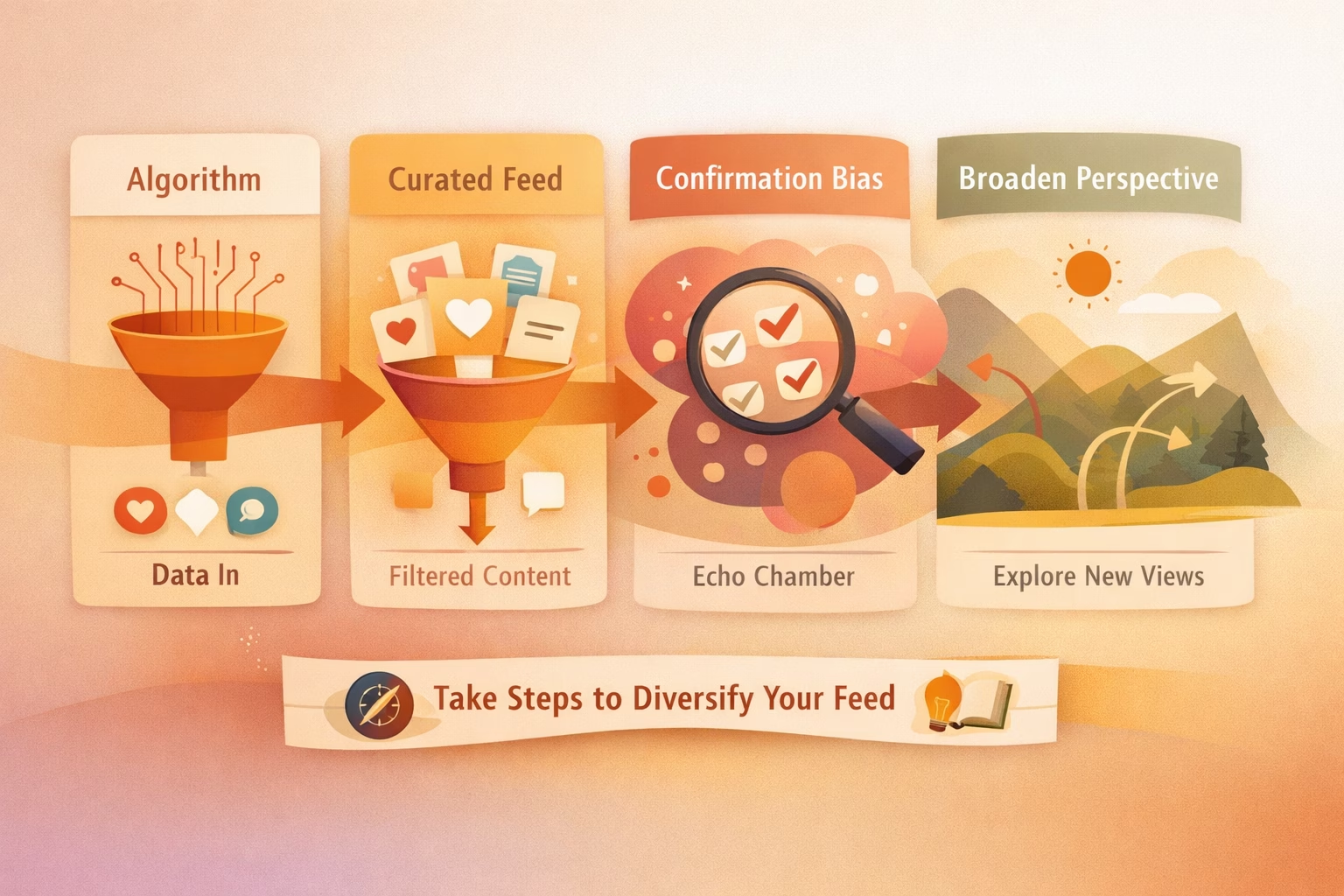
Beginner’s Guide to Confirmation Bias in Technology and AI
Beginner’s Guide to Confirmation Bias in Technology and AI: How Algorithms Reflect Your Beliefs Confirmation bias in technology happens when algorithms repeatedly show you information that matches what you already believe or prefer. These algorithms are step-by-step systems that analyze your behavior—such as clicks, likes, and watch time—to predict what you want to see next.…
-
Beginner’s Guide to UNICEF USA Advocacy and Civic Engagement
Advocacy means using your voice to influence laws and policies that affect others. At UNICEF USA, advocacy helps protect the rights and wellbeing of children around the world by encouraging action from U.S. citizens and lawmakers. While donations are powerful, raising your voice can be just as impactful. UNICEF USA gives Americans a platform to…