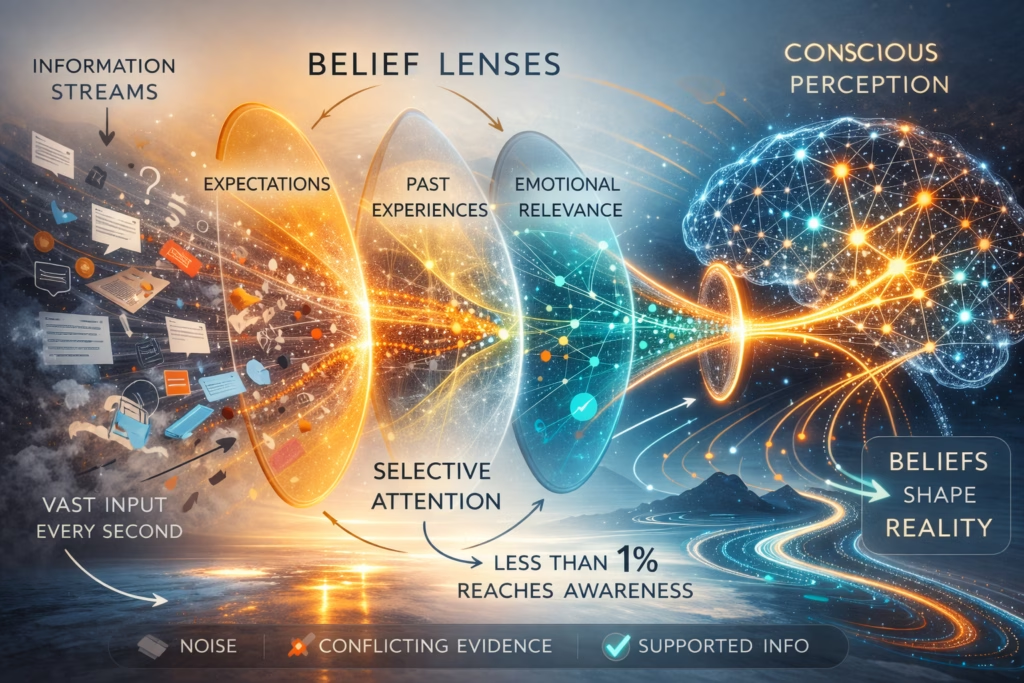

At first glance, people often assume they simply observe the world and then form beliefs about what they see. Careful reflection helps us recognize a different pattern. Beliefs frequently exist before interpretation begins, which means they help organize perception itself. Confirmation bias reveals this principle with unusual clarity. It describes the tendency for individuals to recognize, interpret, and remember information that aligns with existing beliefs while interpreting contradictory information through the same framework.
This pattern is not simply an error in reasoning. It reflects a deeper cognitive principle. The mind must filter overwhelming amounts of information in order to understand experience. As a result, beliefs function as organizing structures that clarify what receives attention and what appears meaningful within a given context. Over time, perception and belief move into alignment, which means the reality a person experiences gradually reflects the interpretive patterns through which they understand the world.
Understanding confirmation bias therefore helps reveal a broader insight. Beliefs do not simply explain reality after the fact. They participate in shaping how reality becomes recognizable in the first place.
In this guide, we walk through several shared insights:
- Understanding confirmation bias as a principle of cognitive pattern recognition.
- Recognizing why belief challenges can disrupt psychological alignment.
- Clarifying how confirmation bias appears across relationships, health, work, and information environments.
- Realizing how digital systems and artificial intelligence mirror human interpretive patterns over time.
Human cognition depends on the ability to organize complexity. The brain processes immense streams of sensory information every moment, yet conscious awareness can only examine a small portion of that activity. Because of this limitation, the mind relies on interpretive frameworks that help clarify what deserves attention. Beliefs provide one of the most powerful organizing frameworks available to cognition.
Once a belief stabilizes, the mind begins to recognize patterns that align with it more easily. Information consistent with the belief appears coherent within the existing context. Information that challenges the belief may still appear, yet it often requires greater interpretive effort to integrate. As a result, people frequently reinterpret or minimize conflicting signals in order to preserve cognitive alignment.
Over time, this dynamic creates a reinforcing pattern. Beliefs guide perception, perception confirms belief, and memory preserves the alignment between them. This process gradually constructs a personal sense of reality that feels self-evident to the person experiencing it.
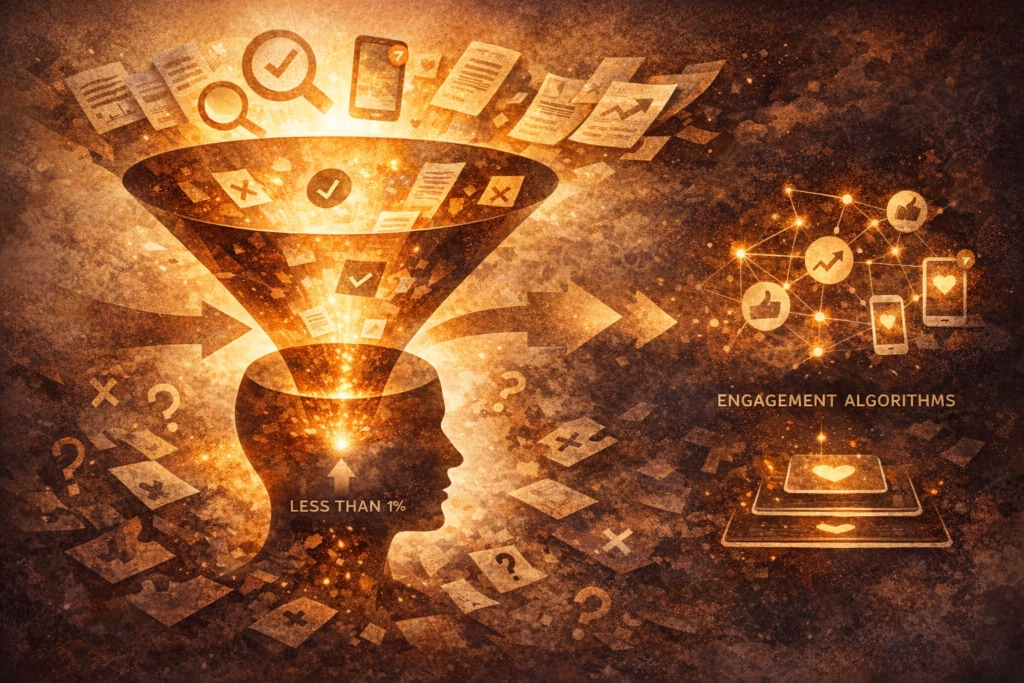
Modern information environments reveal the same principle operating at scale. Digital platforms recognize behavioral patterns and present information aligned with previous engagement. As a result, technological systems often reinforce the same interpretive patterns that already guide human attention. Therefore, confirmation bias helps reveal how personal cognition and technological systems can move into alignment over time.

How Confirmation Bias Reveals the Structure Through Which Beliefs Shape Reality
Understanding confirmation bias requires more than recognizing a single psychological tendency. It requires examining the deeper principles through which the mind organizes meaning. The sections below move from observation to pattern recognition and then toward implication. They clarify how confirmation bias operates within cognition, why belief challenges can disrupt psychological alignment, how the pattern appears across everyday contexts, and why modern technology often reinforces the same dynamic. Taken together, these sections help us understand a larger principle. Beliefs influence perception not only by shaping interpretation but also by guiding attention. As a result, confirmation bias reveals how individuals gradually construct a stable experience of reality through the interpretive frameworks they carry over time.
Understanding Confirmation Bias as a Principle of Cognitive Pattern Recognition
Observation reveals that the mind must constantly simplify complexity in order to function. The environment presents far more information than conscious awareness can fully interpret. Therefore cognition relies on organizing principles that clarify what signals matter and how they should be understood.
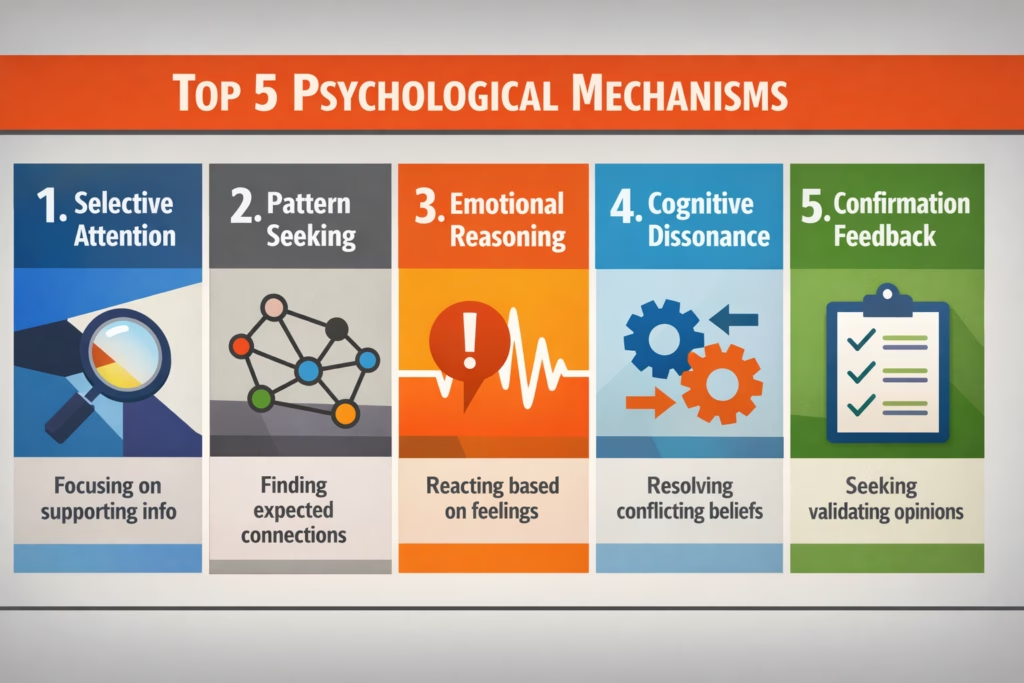
Confirmation bias emerges from this need for cognitive efficiency. When a person holds a belief about how something works, the mind begins to recognize patterns that support that belief more readily. Evidence aligned with the existing framework appears easier to interpret because it fits the mental structure already in place. As a result, confirming information often feels intuitive while contradictory information feels uncertain or incomplete.
This dynamic reveals an important principle about perception. The mind does not merely observe reality and then decide what it means. Instead, interpretation guides attention from the beginning of the perceptual process. Therefore beliefs influence which patterns become visible and which remain less noticeable within the broader context of experience.
Over time, repeated alignment between expectation and observation creates a coherent personal worldview. People often experience this worldview as simple common sense. Yet closer reflection reveals that the sense of certainty emerges because belief and perception have gradually moved into alignment.
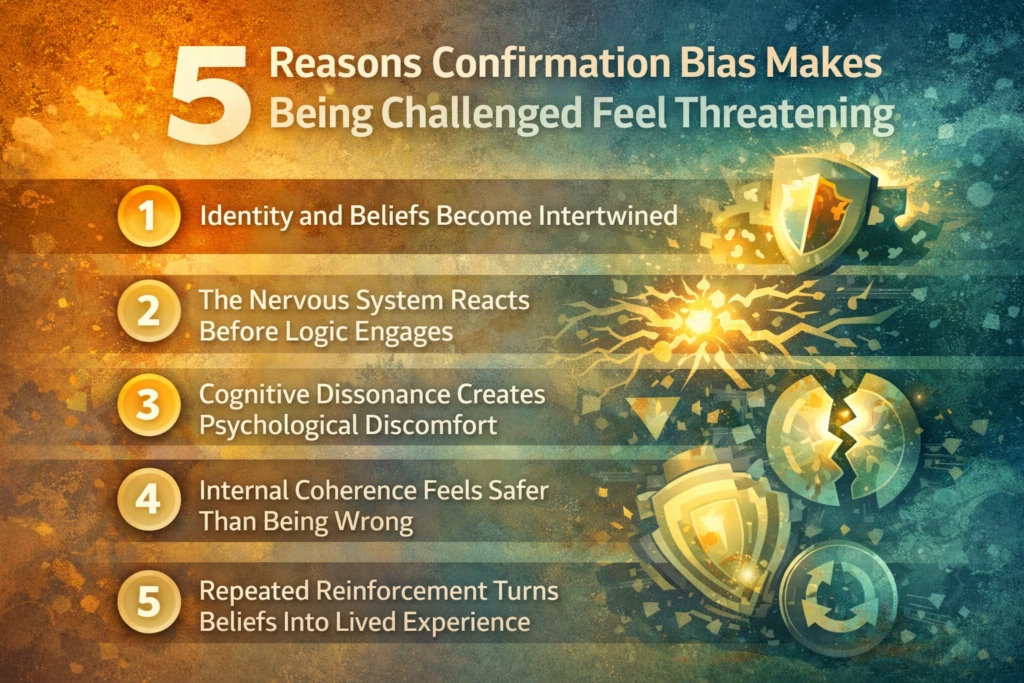
Five Psychological Patterns That Clarify Why Belief Challenges Feel Personal
- Beliefs provide interpretive structure.
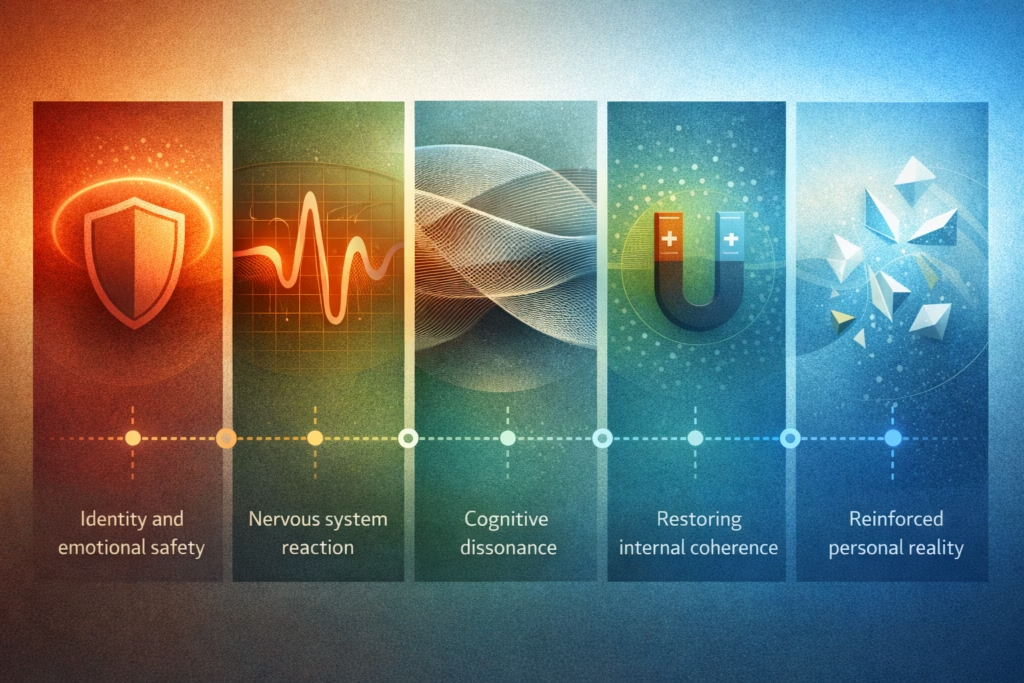
People rely on beliefs to understand how events connect and why outcomes occur. When a belief becomes uncertain, the interpretive structure supporting that understanding also becomes unstable. Therefore disagreement can feel unsettling because it disrupts the framework through which a person recognizes meaning. - Beliefs often develop in alignment with identity.
Over time individuals interpret personal experience through the beliefs they hold. These beliefs help clarify values, relationships, and social belonging. As a result, challenging a belief can sometimes feel like challenging the person’s sense of identity rather than simply questioning an idea. - Cognitive dissonance reveals the mind’s search for alignment.
When contradictory interpretations appear simultaneously, the mind experiences tension. This tension reflects a deeper principle: cognition seeks alignment between belief, perception, and understanding. Therefore people often attempt to reinterpret evidence in ways that restore coherence. - Emotional responses can precede reflective reasoning.
The nervous system evaluates significance rapidly, often before conscious reasoning begins. When beliefs connected to identity or stability appear threatened, emotional responses may emerge before the person fully understands the situation. This sequence can make disagreement feel more intense than the topic alone would suggest. - Revising beliefs requires reorganizing meaning.
Changing a belief is rarely a simple adjustment. It often requires individuals to reconsider patterns, assumptions, and interpretations accumulated over time. Because this process requires cognitive effort, people may initially preserve existing beliefs until reflection gradually clarifies a new framework.
Recognizing these patterns helps clarify why belief revision often unfolds gradually rather than through immediate persuasion.
Recognizing Confirmation Bias Across Relationships, Health, Work, and Digital Contexts
The first step toward recognizing confirmation bias is learning to observe how expectations shape interpretation. In relationships, people frequently develop early impressions that become organizing narratives. When someone is understood as supportive, unreliable, or critical, later interactions are interpreted through that lens. Over time, confirming behaviors become easier to notice, which means perception gradually reinforces the initial belief.
Health decisions reveal a similar pattern. Once individuals align with a particular explanation for symptoms or treatment approaches, they often recognize evidence that confirms the preferred interpretation more readily than evidence that complicates it. As a result, decision-making can become shaped by interpretive alignment rather than by the full range of available information.
Professional environments also reflect this principle. Leaders and teams often interpret data through strategic assumptions already guiding their decisions. Evidence that supports those assumptions appears coherent within the organizational context, while contradictory signals may receive less attention. Therefore confirmation bias can influence institutional learning as well as individual reasoning.
Digital environments make this pattern even more visible. Online platforms analyze engagement patterns and deliver information aligned with prior behavior. Over time, users may encounter a stream of content that reflects their existing beliefs more than the diversity of broader reality. Recognizing this dynamic helps clarify how interpretive patterns and information systems can gradually reinforce one another.
Understanding Confirmation Bias Within Technology and Artificial Intelligence Systems
Modern technology often reflects the same principles that shape human cognition. Recommendation systems analyze behavioral data in order to understand user preferences and predict what information will feel meaningful within that context. As a result, digital platforms frequently present content aligned with earlier interactions.
This design principle helps clarify why confirmation bias can become amplified in digital environments. When users repeatedly encounter information consistent with their previous interests, the interpretive framework guiding those interests becomes stronger. Over time the informational environment itself begins to reflect the user’s belief patterns.
Artificial intelligence systems reveal a related dynamic. AI models learn from historical data produced through human activity. Because this data reflects cultural assumptions, social patterns, and prior interpretations, algorithms may reproduce similar patterns within their outputs. Therefore AI systems often reveal the interpretive context from which they emerged rather than a completely neutral perspective.
Understanding this interaction helps us recognize an important principle. Technology does not simply transmit information. It often mirrors the interpretive frameworks present in the human behaviors used to train and guide it. As a result, digital systems and human cognition can gradually move into alignment.

FAQs
Confirmation bias reveals that perception is not entirely neutral. Individuals interpret information through existing beliefs, which means the mind recognizes patterns that align with prior understanding more easily than patterns that challenge it.
The brain processes more information than conscious awareness can examine. Beliefs therefore function as organizing principles that help clarify what deserves attention and how experience should be interpreted within a given context.
Beliefs often support psychological coherence and identity. When those beliefs are challenged, individuals may experience tension because the mind is attempting to restore alignment between interpretation, experience, and self-understanding.
Confirmation bias appears in relationships, professional judgment, health decisions, and digital information environments where expectations guide interpretation.
Algorithms recognize behavioral patterns and present information aligned with prior engagement. As a result, individuals may repeatedly encounter perspectives similar to those they already hold, which can strengthen existing interpretations over time.
Recognizing the Interpretive Principles That Shape Understanding
When individuals begin to understand confirmation bias more deeply, they often recognize that perception is shaped by interpretive frameworks operating beneath awareness. Beliefs help organize attention, clarify meaning, and guide interpretation within complex environments. As a result, people gradually experience a reality that reflects the patterns through which they understand the world.
Recognizing this principle does not mean abandoning conviction or certainty. Instead, it reveals the importance of awareness. When people recognize how belief patterns influence perception, they gain the ability to examine their assumptions with greater clarity and context.
Over time, this awareness can encourage a more reflective relationship with interpretation itself. Individuals continue forming beliefs, yet they do so with greater recognition of the patterns shaping their understanding.
Reflective Consideration:
Consider observing how your own expectations shape interpretation within everyday experiences, because recognizing those patterns can clarify how belief and perception gradually move into alignment over time.