
Closer looks. Clearer signals.

Tag: Psychology

Articles grounded in psychological research and theory — covering how the mind works, behavioral patterns, cognitive processes, and mental frameworks.

ACLU Advocacy Analytical Writing Animal Legal Defense Fund Animal Rights ASPCA B Corp Big Picture Thinking Business and Money Charity Navigator Civil Liberties Community Focus Confirmation Bias Corporate Ethics Critical Thinking Environmental Advocacy Food Security For Advocates For Curious Readers For Donors For Professionals Health and Wellness How It Works LA Food Bank Legal National Women's Law Center Nature Conservancy Nonprofit Sector NRDC Pew Research Center Psychology Research and Data Science and Education SF Bay Area Food Banks Social Impact UNICEF USA Values Driven What Is What You Can Do Why It Matters

  • How Our Beliefs Quietly Shape What We Notice: A Shared Guide to Confirmation Bias

    Illustration of connected lenses and reflections showing how our beliefs and shared perspectives shape what we notice and understand online

    Exploring How Our Minds Filter Experience Together

    Each day, you and I move through a world filled with more information than any mind can consciously process. To help us navigate this complexity, our brains rely on familiar beliefs, experiences, and expectations that gently guide what we notice and what feels meaningful.

    One pattern that often shapes this process is confirmation bias. It describes how we naturally notice and remember information that aligns with what we already believe, while other details receive less attention. This is not a flaw in you or anyone else. It is a shared human tendency that helps the mind stay efficient.

    When we explore this pattern together, we begin to see how perception is something we co-create with our beliefs, experiences, and communities. With a little awareness and care, you and I can approach information with more curiosity, patience, and trust.

    In this guide, we walk through several shared insights:

    1. How confirmation bias gently filters what you and I notice.
    2. Why challenges to beliefs can sometimes feel personal in conversations.
    3. Where this pattern appears in relationships, work, health, and online spaces.
    4. How digital systems and AI can reflect and reinforce familiar viewpoints.

    As we explore these ideas together, we build a more supportive relationship with how our minds interpret the world around us.

    Abstract illustration of two people exploring different perspectives together, using shared shapes and reflections to understand the same event

    How Our Minds and Beliefs Work Together to Shape Experience

    The sections below invite you to explore how confirmation bias develops, how it shows up in everyday interactions, and how modern technology can echo the beliefs we already carry. When we look at these patterns with curiosity and care, we create space for reflection, shared learning, and thoughtful dialogue.

    How Our Minds Use Beliefs to Guide What We Notice

    Confirmation bias is the tendency for people to notice, interpret, and remember information that aligns with their existing beliefs. This process helps the brain stay organized and efficient.

    Although your senses gather enormous amounts of information each moment, only a small portion reaches conscious awareness. To help manage this flow, the mind uses mental filters shaped by past experiences, expectations, and emotional meaning.

    Once a belief becomes familiar, supporting details often stand out more easily. At the same time, information that feels less aligned may receive less attention. Over time, this process can gently reinforce the perspectives that already feel familiar to you.

    Why Belief Challenges Can Feel Personal in Conversations

    Beliefs often connect with identity, relationships, and a sense of belonging. Because of this connection, disagreements can sometimes feel emotionally meaningful rather than purely informational.

    When a belief feels tied to who we are or to the communities we value, the nervous system may respond protectively before reflective reasoning has time to engage. This is a common human experience, and it can appear in many conversations.

    Several shared dynamics often contribute to this experience:

    1. Identity connection: Beliefs can reflect how people see themselves and their role within a community.
    2. Emotional investment: Long-held ideas often carry personal meaning and memories.
    3. Mental harmony: When new information conflicts with existing beliefs, the mind may seek ways to restore internal balance.
    4. Social belonging: Shared viewpoints often help people feel connected with others.
    5. Cognitive ease: Familiar ideas require less effort for the brain to maintain.

    When you and others recognize these dynamics, conversations can move toward more supportive listening and thoughtful exchange.

    How You Can Notice Confirmation Bias in Everyday Life

    Confirmation bias often appears in subtle ways throughout daily life. When you become aware of these patterns, you gain a gentle opportunity to pause and reflect with curiosity.

    • In relationships: Expectations can guide what behaviors we notice and remember. When we expect kindness, supportive moments may stand out more clearly. When we expect tension, those signals can become more visible.
    • In health and personal choices: Initial impressions often guide which advice or evidence feels trustworthy. Over time, confirming information may feel more convincing.
    • In workplaces and teams: Shared assumptions sometimes guide group decisions. When teams stay open to diverse perspectives, collaboration often becomes stronger and more balanced.
    • In online environments: Digital platforms frequently recommend content similar to what users previously engaged with. Over time, this pattern can create the sense that certain views are widely shared, even when exposure has simply been filtered.

    How Technology and AI Reflect the Patterns We Engage With

    Many digital systems are designed to learn from user behavior. Recommendation engines, search platforms, and social media feeds analyze engagement patterns so they can present information that feels relevant and familiar.

    Because these systems learn from past interactions, they often present content that resembles what users previously explored. In this way, digital environments sometimes mirror the preferences and beliefs that people already carry.

    Artificial intelligence models can also reflect patterns found within the data used during training. When historical assumptions appear in datasets, those patterns may be echoed in future outputs.

    By recognizing how technology reflects our behavior, you and others can engage with digital spaces in a more thoughtful and balanced way.

    Abstract illustration of connected digital networks showing how AI recommendations link people, interests, and information they encounter online

    FAQs

    What does confirmation bias mean in everyday life?

    Confirmation bias refers to the tendency for people to notice and remember information that supports their existing beliefs while giving less attention to conflicting evidence.

    How does confirmation bias shape perception?

    It influences which details stand out and how events are interpreted. Information that aligns with beliefs often feels more visible and meaningful.

    Why can disagreements feel personal?

    Beliefs often connect with identity, relationships, and community. When those beliefs are questioned, emotional responses may appear before reflective thinking engages.

    How much information reaches conscious awareness?

    Research suggests that only a small portion of the information our brains process becomes consciously noticeable.

    Do digital algorithms reinforce confirmation bias?

    Many recommendation systems show users content similar to what they have engaged with before, which can reinforce existing viewpoints over time.

    Creating Space for Curiosity Beyond Automatic Filters

    When you and I recognize how confirmation bias works, we gain an opportunity to pause before accepting our first interpretation. That pause helps create room for curiosity, reflection, and respectful conversation.

    Together, this awareness supports stronger dialogue, deeper learning, and more thoughtful connections within our communities.

    If you would like to explore more about how beliefs and perception interact, these resources may offer helpful guidance:

    If this topic resonates with you, you might consider continuing the conversation with others who are also curious about how our shared human thinking patterns shape the way we experience the world.
  • Confirmation Bias: Belief Structures and Perceptual Filtering

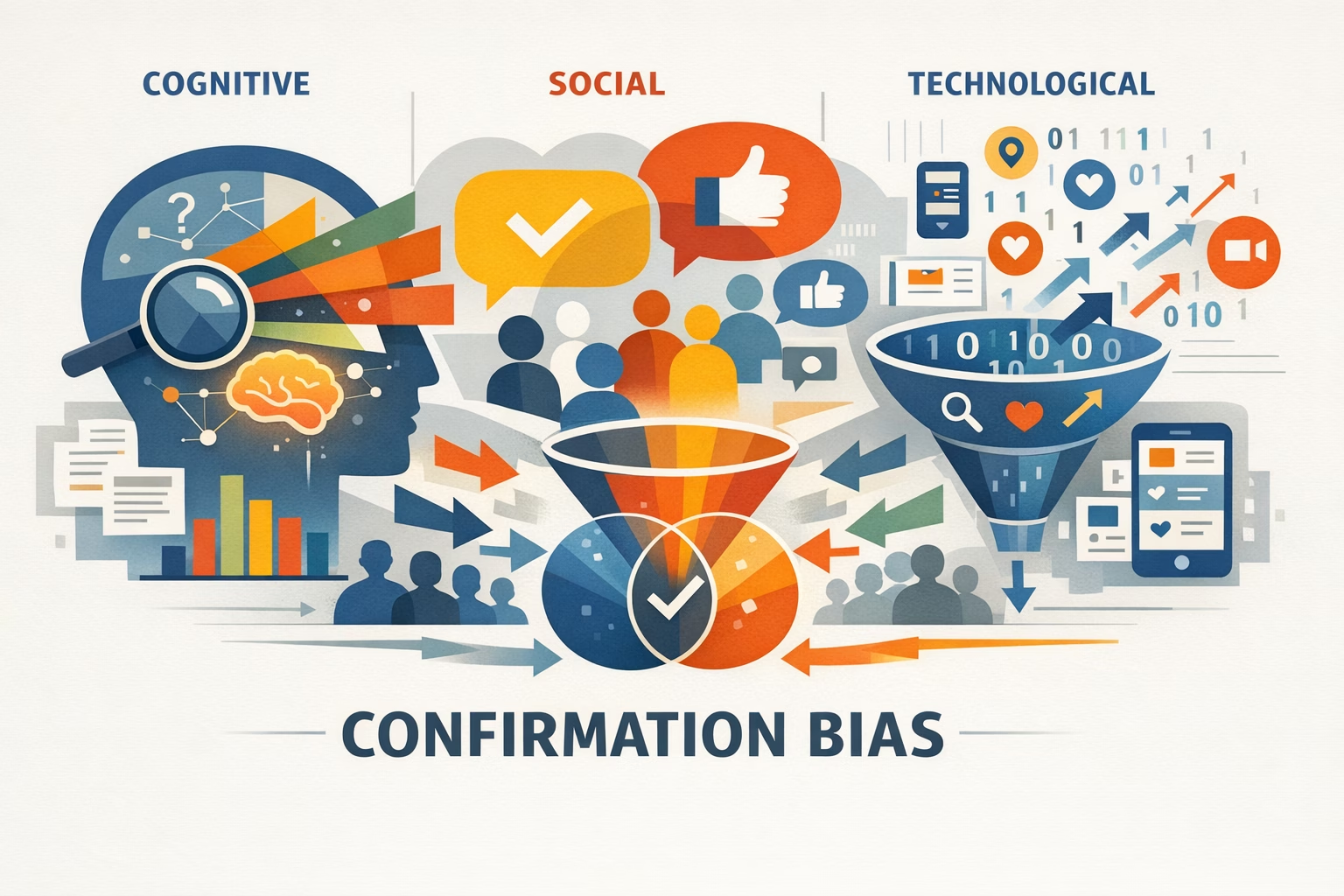
    confirmation bias mechanisms illustrated through cognitive, social, and technological filtering diagram

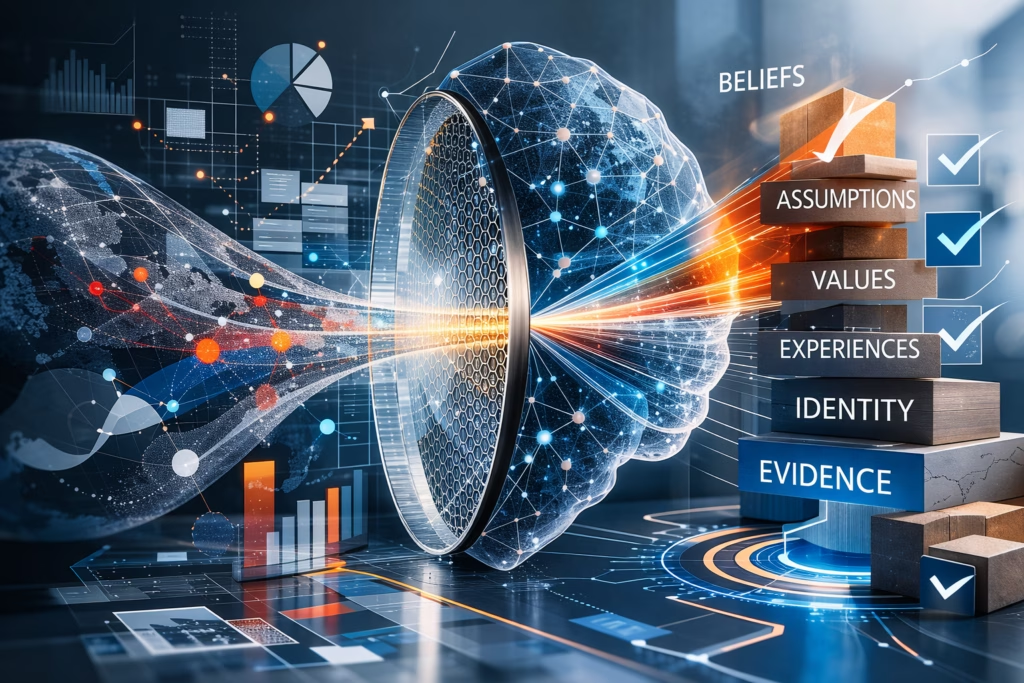
    Confirmation bias describes a cognitive tendency in which the mind preferentially selects information that supports existing beliefs while filtering information that contradicts those beliefs. Conscious awareness processes only a small fraction of the information available to the brain. Consequently, belief structures function as perceptual filters that determine which signals appear relevant, credible, and meaningful within an interpreted environment.

    1. Definition and perceptual filtering mechanisms associated with confirmation bias.
    2. Cognitive and physiological conditions associated with belief challenge responses.
    3. Domains in which confirmation bias appears in everyday interpretive contexts.
    4. Algorithmic reinforcement of confirmation bias within technology and artificial intelligence systems.

    Confirmation bias operates through cognitive mechanisms that influence attention, interpretation, and memory processes. Less than one percent of processed information typically reaches conscious awareness; therefore, perceptual systems rely on expectation, prior experience, and emotional relevance during information selection. Repeated exposure to belief-consistent information gradually strengthens interpretive frameworks and stabilizes perceived reality. In addition, technology and artificial intelligence systems frequently reinforce these patterns through engagement-based filtering and recommendation processes. Analytical examination of these dynamics clarifies how belief structures influence interpretation prior to deliberate reasoning.

    confirmation bias mechanisms illustrated across cognitive social and technological systems

    Structural Mechanisms Through Which Confirmation Bias Constructs Interpreted Personal Reality

    The following sections analyze the formation of confirmation bias, the defensive response frequently associated with belief challenges, the presence of the bias across everyday interpretive domains, and the amplification of these mechanisms within digital systems. Each section examines how belief structures influence interpretation of information and contribute to the construction of perceived reality.

    Definition and Perceptual Filtering Mechanisms of Confirmation Bias

    Confirmation bias refers to the cognitive tendency to seek, interpret, and remember information that supports established beliefs. The brain processes extensive volumes of sensory and cognitive input during each moment; however, less than one percent of that information typically reaches conscious awareness. Efficient perception therefore requires filtering mechanisms based on expectation, prior experience, and emotional relevance. Once a belief framework forms, confirming information becomes more cognitively salient, whereas contradictory information receives reduced emphasis during attention and recall. The resulting process forms a reinforcing interpretive loop in which belief structures guide perception and perception strengthens the underlying belief framework.

    Five Cognitive and Physiological Mechanisms Associated With Defensive Responses to Belief Challenges

    Belief structures frequently connect with identity organization, emotional stability, and perceived understanding of surrounding environments. When contradictory information appears, the experience may be interpreted as a disruption to interpretive coherence rather than as neutral evidence. Physiological and cognitive reactions may therefore occur before reflective reasoning evaluates the information.

    1. Identity association: A belief may integrate with personal identity structures and social affiliation frameworks.
    2. Emotional stability maintenance: A stable belief framework contributes to psychological predictability and perceived environmental order.
    3. Nervous system activation: Disagreement can activate stress responses before analytical evaluation processes occur.
    4. Cognitive dissonance: Incompatible information generates psychological discomfort when established interpretations encounter contradiction.
    5. Internal coherence preservation: Cognitive systems frequently prioritize maintenance of a consistent interpretive structure.

    These mechanisms illustrate how belief defense functions as a cognitive process that maintains interpretive coherence within perception and evaluation.

    Identification of Confirmation Bias Across Relationship, Health, Workplace, and Digital Information Contexts

    Confirmation bias appears across multiple domains of everyday interpretation and decision processes. Expectations influence which observations receive attention, while memory processes reinforce early interpretations through selective recall mechanisms.

    • Relationships: Expectations influence interpretation of interpersonal behavior and determine which interactions remain salient in memory.
    • Health decisions: Initial impressions regarding symptoms or treatments influence evaluation of subsequent evidence.
    • Workplace interpretation: Early judgments regarding competence or reliability guide interpretation of later performance information.
    • Online environments: Digital platforms frequently deliver content aligned with prior preferences, producing reinforcing informational exposure patterns.

    Recognition of these patterns supports structured evaluation of information across several domains of everyday experience.

    Algorithmic Reinforcement of Confirmation Bias in Technology and Artificial Intelligence Systems

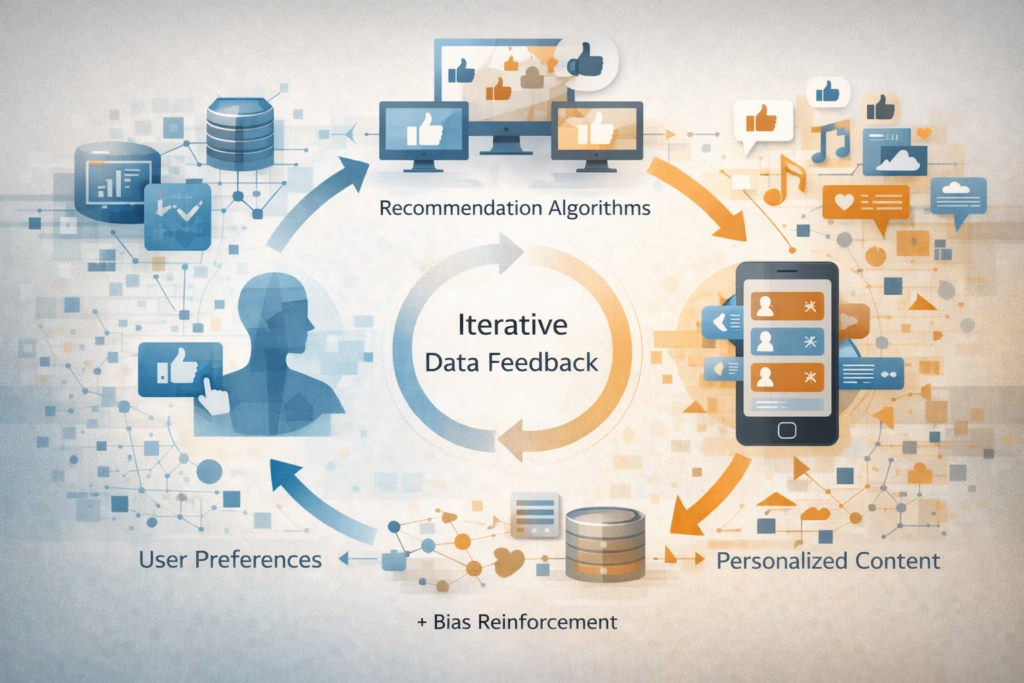
    Digital technology frequently operationalizes confirmation bias through systems that analyze historical interaction patterns and engagement signals. Recommendation algorithms learn user preferences and repeatedly present similar categories of information, gradually narrowing informational exposure. Artificial intelligence systems may also reflect assumptions contained within training data and optimization objectives. When digital systems repeatedly mirror prior behavioral patterns, the resulting informational environment may appear neutral even though earlier interaction patterns influence the output. Through this mechanism, technological infrastructures can reinforce existing interpretive frameworks while reducing exposure to alternative perspectives.

    diagram of recommendation algorithms reinforcing user preference patterns through iterative data feedback

    FAQs

    Definition of confirmation bias

    Confirmation bias refers to the tendency to favor information that supports existing beliefs while disregarding contradictory evidence.

    Mechanisms through which confirmation bias influences perception.

    Confirmation bias filters attention and interpretation so that confirming details receive greater cognitive emphasis while conflicting information receives reduced emphasis.

    Conditions associated with defensive responses to belief contradiction.

    Challenges to belief frameworks can activate defensive responses when identity structures or perceived psychological stability become involved.

    Proportion of processed information reaching conscious awareness.

    Less than one percent of processed information typically reaches conscious awareness.

    Algorithmic interaction between recommendation systems and confirmation bias.

    Engagement-based systems frequently amplify content aligned with existing user preferences.

    Analytical Recognition of Cognitive Filtering Mechanisms in Belief-Based Perception

    Recognition of confirmation bias clarifies how belief frameworks influence attention, interpretation, and memory before deliberate reasoning occurs. Analytical awareness of these mechanisms supports more systematic evaluation of evidence and interpretation of information.

    Examine interpretive assumptions during evaluation of new information in order to identify the influence of belief structures on perception and decision processes.

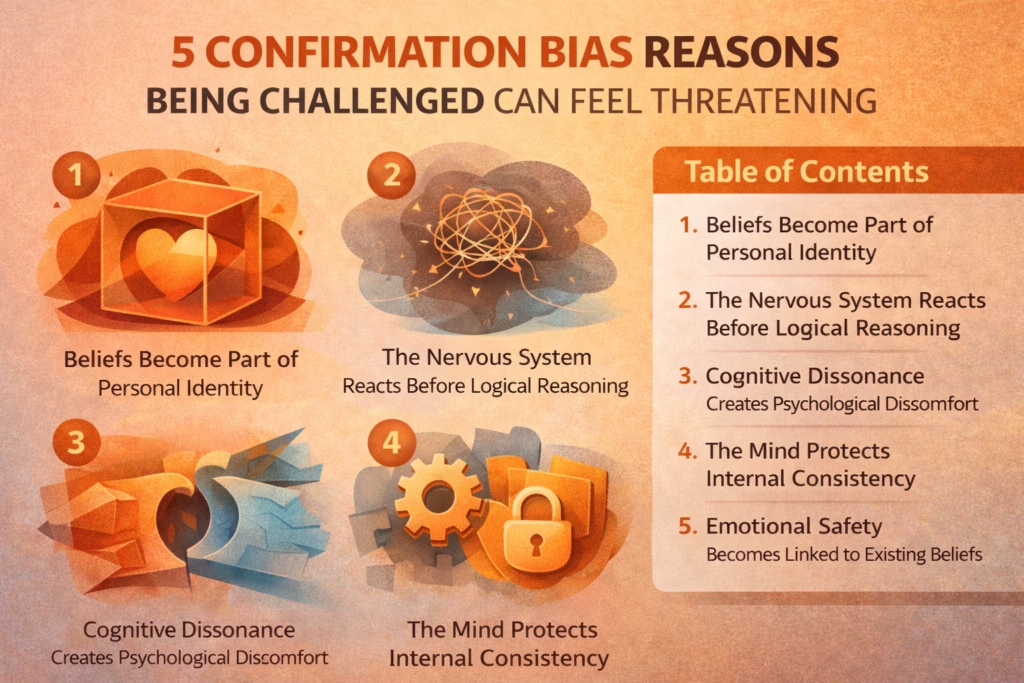
  • 5 Reasons Confirmation Bias Makes Being Challenged Feel Threatening

    Confirmation bias abstract scene showing disagreement shifting from threat to safety through a warm glowing archway
    5 confirmation bias reasons infographic showing five abstract icons for identity, nervous system reaction, dissonance, consistency protection, and emotional safety
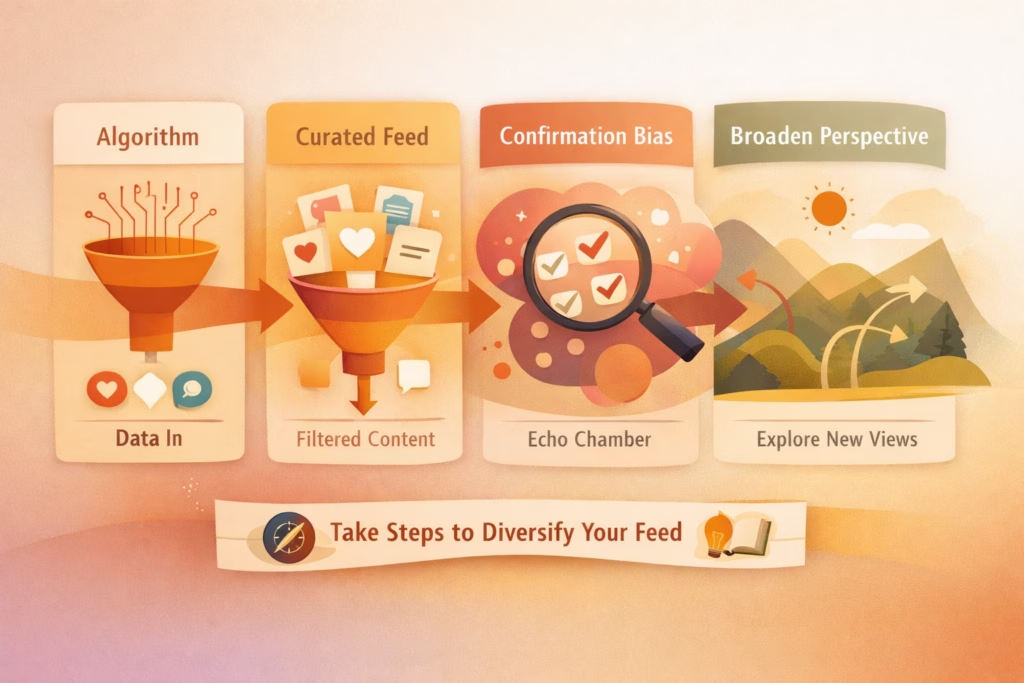
  • Beginner’s Guide to Confirmation Bias in Technology and AI: How Algorithms Reflect Your Beliefs

    AI algorithms confirmation bias infographic showing how curated feeds create echo chambers and ways to broaden perspective
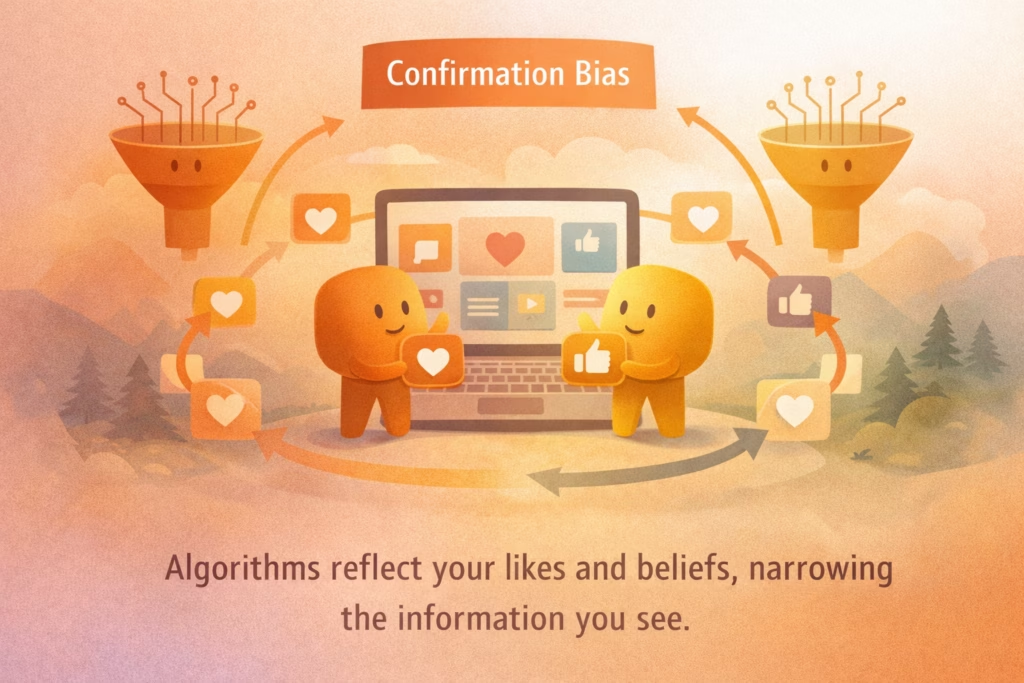
    confirmation bias in technology illustration showing AI algorithms reinforcing familiar content in a digital feed
  • How to Identify Confirmation Bias

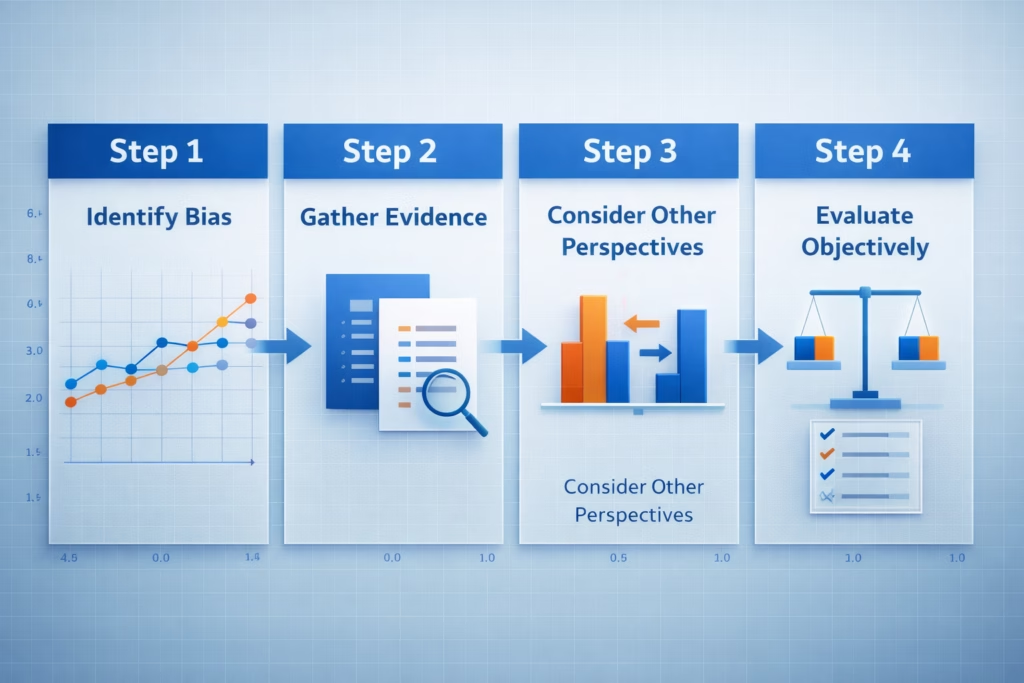
    confirmation bias step-by-step process infographic with structured blue grid, charts, and evaluation scale
    confirmation bias analytical process diagram with structured data streams filtered across relationships health work and online feeds
  • Ultimate Guide to Confirmation Bias

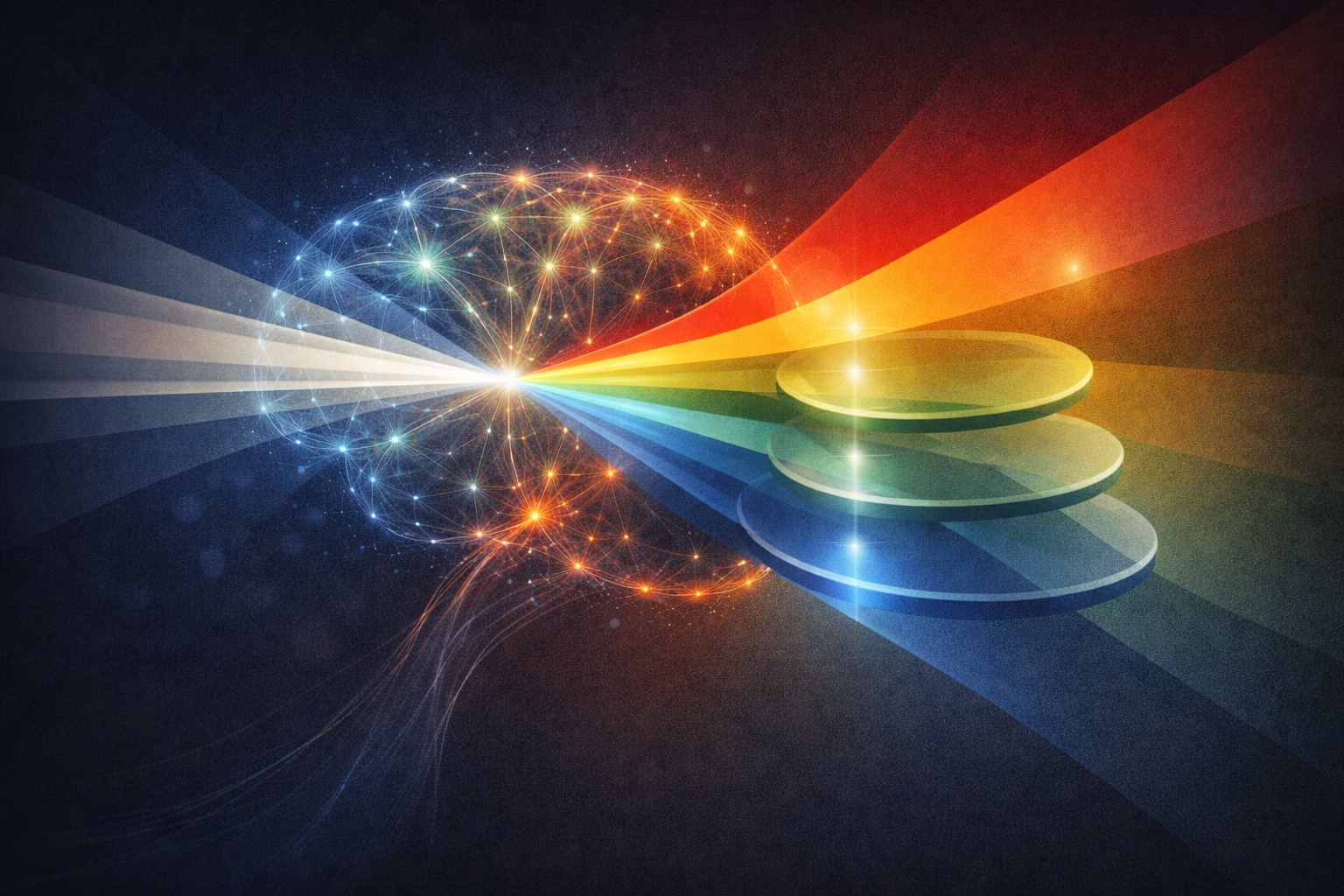
    Abstract neural network filtering light through layered belief-shaped lenses

    Everything You Need to Know About How Beliefs Shape Your Reality

    Confirmation bias is the mind’s tendency to favor information that supports existing beliefs while filtering out what contradicts them. Because conscious awareness processes only a tiny fraction of available information, beliefs act as filters that determine what feels true, relevant, and important. Understanding this mechanism helps you recognize how perception is shaped before you even realize it.

    • What confirmation bias is and how it filters perception.
    • Why belief challenges feel threatening or painful.
    • Where confirmation bias shows up in daily life.
    • How technology and AI reinforce belief loops.
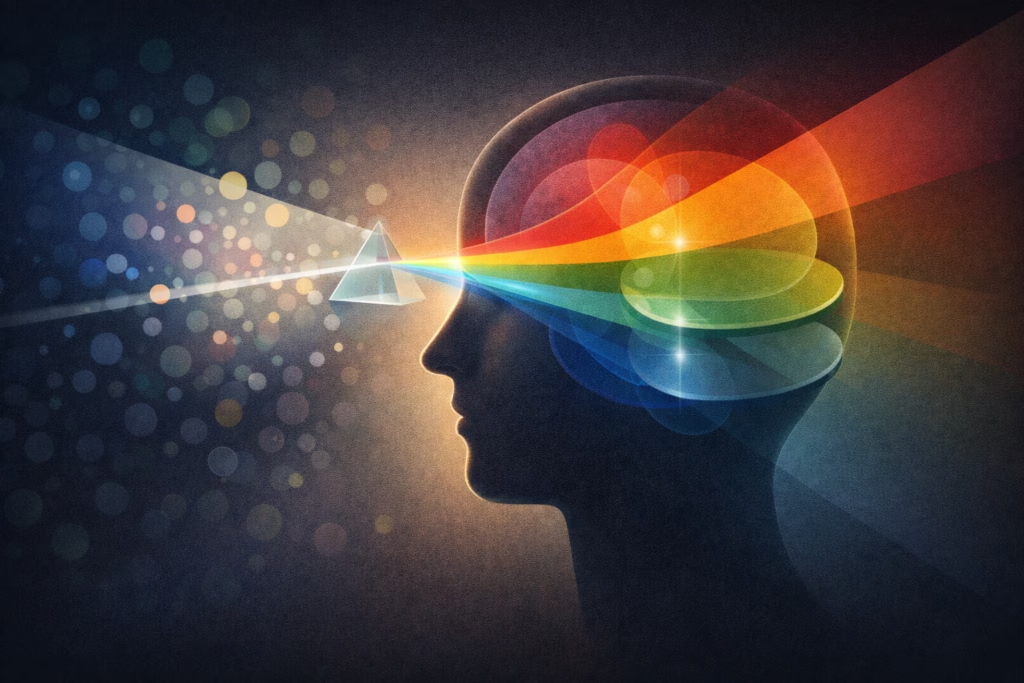
    Confirmation bias illustration of light filtered through prism inside human silhouette showing selective perception

    What Is Confirmation Bias and How Does the Brain Filter Reality?

    Confirmation bias is the tendency to seek, interpret, and remember information in ways that support existing beliefs. Although the brain processes vast amounts of information each second, less than one percent reaches conscious awareness. To remain efficient, perception is filtered through expectations, past experiences, and emotional relevance. Once a belief forms, confirming details stand out while contradictory evidence fades, creating a reinforcing feedback loop.

    5 Reasons Why Confirmation Bias Makes Being Challenged Feel Threatening

    When beliefs connect to identity or emotional safety, disagreement can feel threatening rather than informative. The nervous system may react before logical reasoning engages, making contradiction feel painful or personal. Cognitive dissonance creates discomfort that people often resolve by defending existing beliefs instead of revising them. In these moments, internal coherence is prioritized over objective accuracy.

    How-To Identify Confirmation Bias in Relationships, Health, Work, and Online Feeds

    Confirmation bias shapes daily experiences across multiple areas of life. In relationships, expectations guide which behaviors are noticed and remembered. In health and work decisions, early impressions narrow what evidence feels credible. Online platforms amplify content aligned with existing views, creating reinforcing loops that feel like consensus rather than filtered exposure.

    Beginner’s Guide to Confirmation Bias in Technology and AI: How Algorithms Reflect Your Beliefs

    Technology operationalizes confirmation bias by embedding patterns from historical data and engagement signals. Recommendation systems learn user preferences and repeatedly present similar content, narrowing exposure over time. AI systems can unintentionally encode human assumptions through training data and optimization goals. When beliefs are mirrored back through digital systems, reinforcement can appear neutral rather than biased.

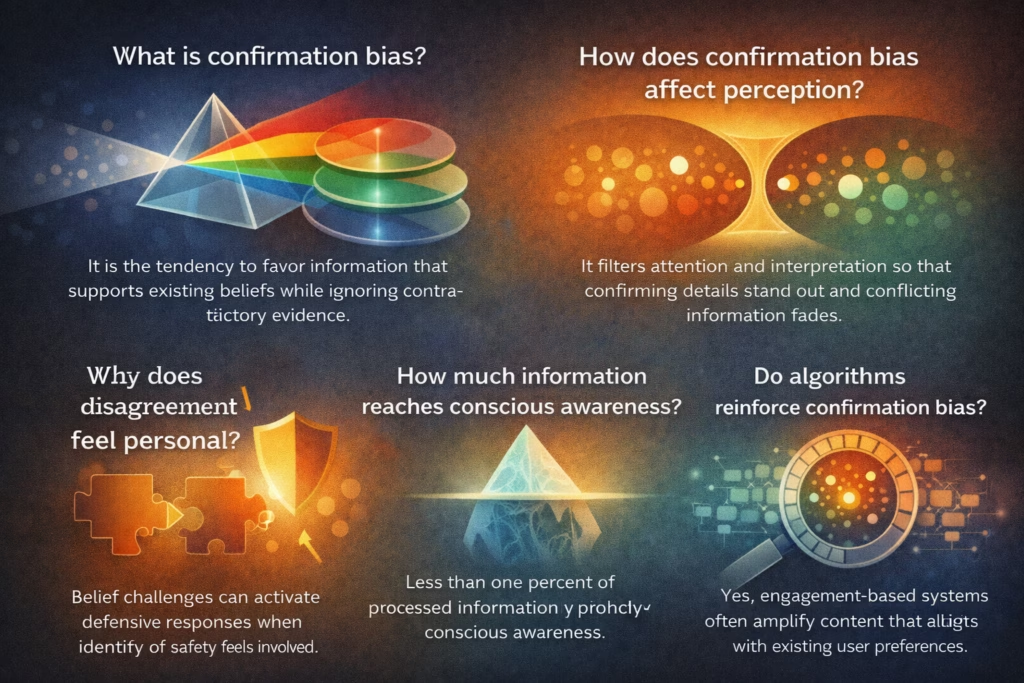
    Confirmation bias FAQ infographic with prism, filters, shield, iceberg and algorithm network icons

    FAQs

    What is confirmation bias?

    It is the tendency to favor information that supports existing beliefs while ignoring contradictory evidence.

    How does confirmation bias affect perception?

    It filters attention and interpretation so that confirming details stand out and conflicting information fades.

    Why does disagreement feel personal?

    Belief challenges can activate defensive responses when identity or safety feels involved.

    How much information reaches conscious awareness?

    Less than one percent of processed information typically reaches conscious awareness.

    Do algorithms reinforce confirmation bias?

    Yes, engagement-based systems often amplify content that aligns with existing user preferences.

    Seeing Beyond Automatic Mental Filters

    Understanding confirmation bias allows you to pause and question automatic interpretations. By recognizing how beliefs filter perception, you create space for more intentional awareness and informed decision-making.