
Closer looks. Clearer signals.

Tag: What Is

Articles that answer definitional questions — explaining what something is, how it is defined, and why the definition matters. Optimized for ‘what is X’ search and answer engine queries.

ACLU Advocacy Analytical Writing Animal Legal Defense Fund Animal Rights ASPCA B Corp Big Picture Thinking Business and Money Charity Navigator Civil Liberties Community Focus Confirmation Bias Corporate Ethics Critical Thinking Environmental Advocacy Food Security For Advocates For Curious Readers For Donors For Professionals Health and Wellness How It Works LA Food Bank Legal National Women's Law Center Nature Conservancy Nonprofit Sector NRDC Pew Research Center Psychology Research and Data Science and Education SF Bay Area Food Banks Social Impact UNICEF USA Values Driven What Is What You Can Do Why It Matters

  • Charity Navigator

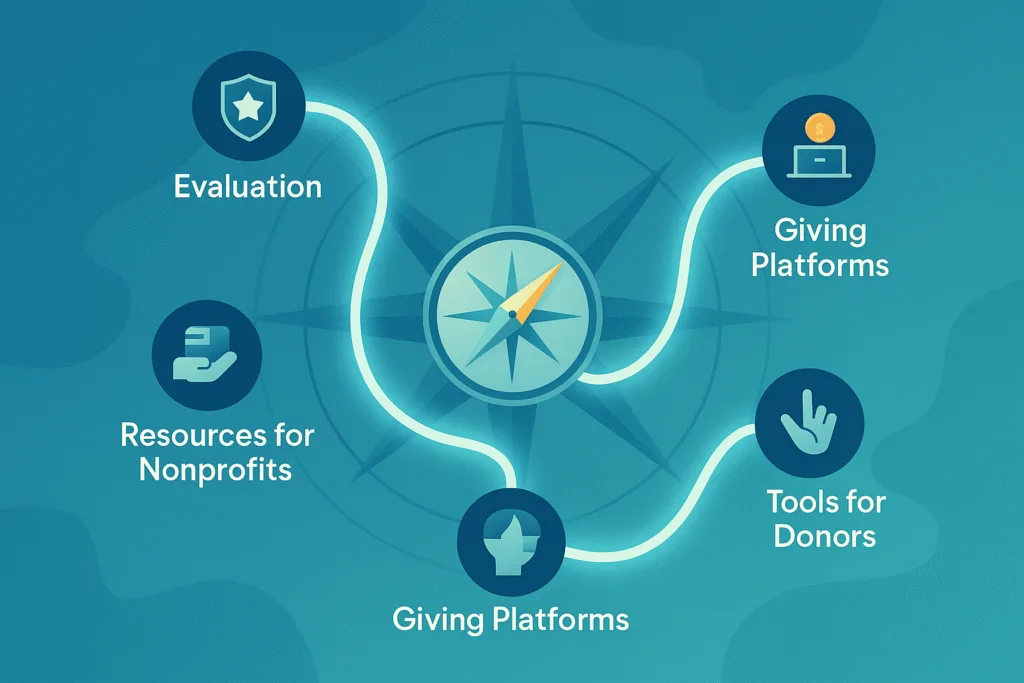
    Charitable giving guide illustration with compass and glowing path representing Charity Navigator’s ratings and tools.

    The Ultimate Guide to Charity Navigator: Ratings, Tools & Giving Smarter

    Charity Navigator navigation map illustration showing four connected nodes for evaluation, donor tools, nonprofit resources, and giving platforms.
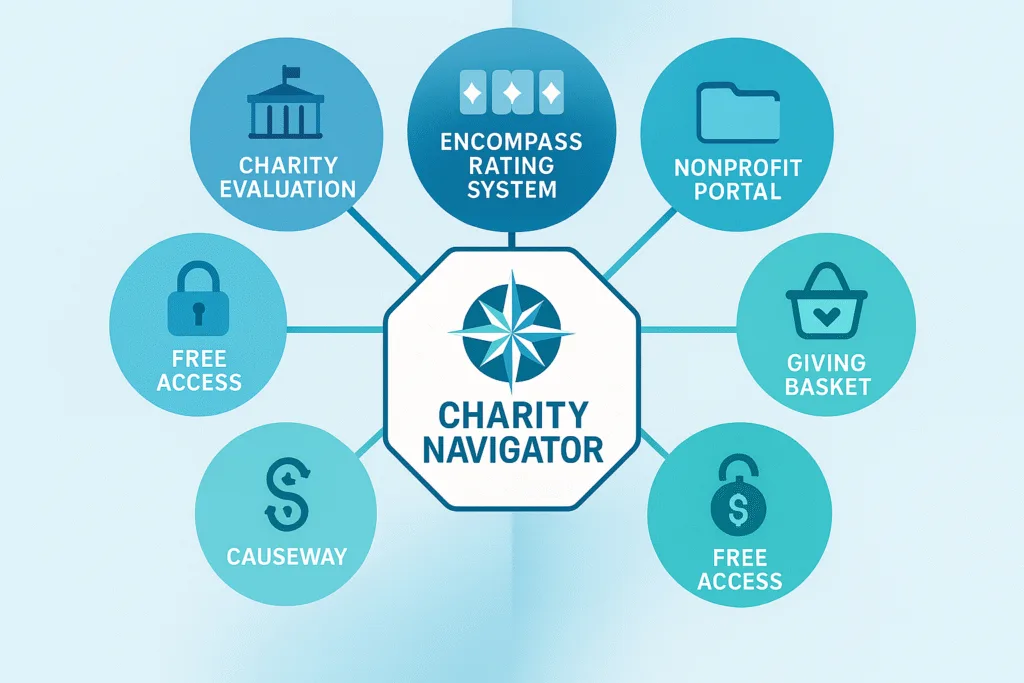
    Charity Navigator FAQ infographic with central hub and six segments illustrating evaluation, rating system, nonprofit portal, Giving Basket, Causeway, and free access.
    What is Charity Navigator?

    Charity Navigator is an independent nonprofit evaluator that provides ratings and information on over 200,000 U.S.-based charities to help donors make informed decisions.

    How does the Encompass Rating System work?

    The Encompass Rating System assesses nonprofits across four areas: Financial Health, Accountability & Transparency, Leadership & Adaptability, and Culture & Community, assigning beacons for each.

    Can nonprofits influence their ratings?

    Nonprofits can update their profiles and submit additional data through the Nonprofit Portal, which may impact their ratings positively by demonstrating transparency and effectiveness.

    What is the Giving Basket?

    The Giving Basket is a tool that allows donors to support multiple charities in a single transaction while controlling the amount of personal information shared with each organization.

    How does Causeway differ from traditional giving?

    Causeway enables donors to contribute to funds focused on specific causes, distributing donations among top-rated charities within that cause area, simplifying the giving process.

    Is there a cost to use Charity Navigator?

    No, Charity Navigator’s ratings and resources are freely accessible to the public, ensuring that donors can make informed decisions without any financial barriers.

  • B Corp

    B Corp Certification essentials infographic showing shield, gears, leaf, and scales icons, digital illustration.

    The Comprehensive Guide to B Corp Certification: Purpose, Process & Impact

    B Corp Certification global illustration with icons for transparency, legal equity, sustainability, and stakeholder engagement, digital art.
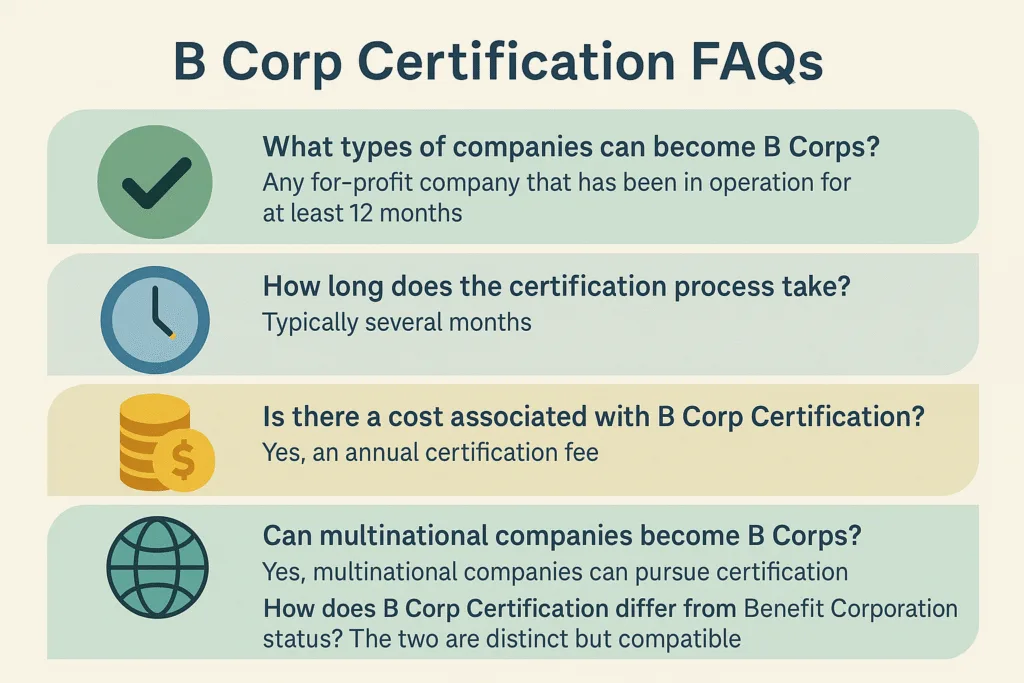
    B Corp Certification FAQ infographic with icons for eligibility, timeline, cost, multinational companies, and legal status differences.
    What types of companies can become B Corps?

    Any for-profit company that has been in operation for at least 12 months can pursue B Corp Certification, regardless of size or industry.

    How long does the certification process take?

    The process typically takes several months, depending on the company’s readiness and the complexity of its operations.

    Is there a cost associated with B Corp Certification?

    Yes, there is an annual certification fee based on the company’s revenue, as well as potential costs for legal adjustments and consulting.

    Can multinational companies become B Corps?

    Yes, multinational companies can pursue certification, but they must meet additional requirements and may need to certify individual subsidiaries.

    How does B Corp Certification differ from Benefit Corporation status?

    B Corp Certification is a third-party certification by B Lab, while Benefit Corporation is a legal status conferred by state law. A company can be both.

  • ASPCA

    ASPCA animal welfare hero illustration, shelter-shaped hands and animal silhouettes, warm natural tones, digital illustration.

    The Ultimate Guide to the ASPCA: Mission, Services & How to Help Right Now

    Abstract ASPCA journey illustration, glowing path and symbolic shapes for mission, shelter, justice, and compassion, in natural colors with light and shadow.
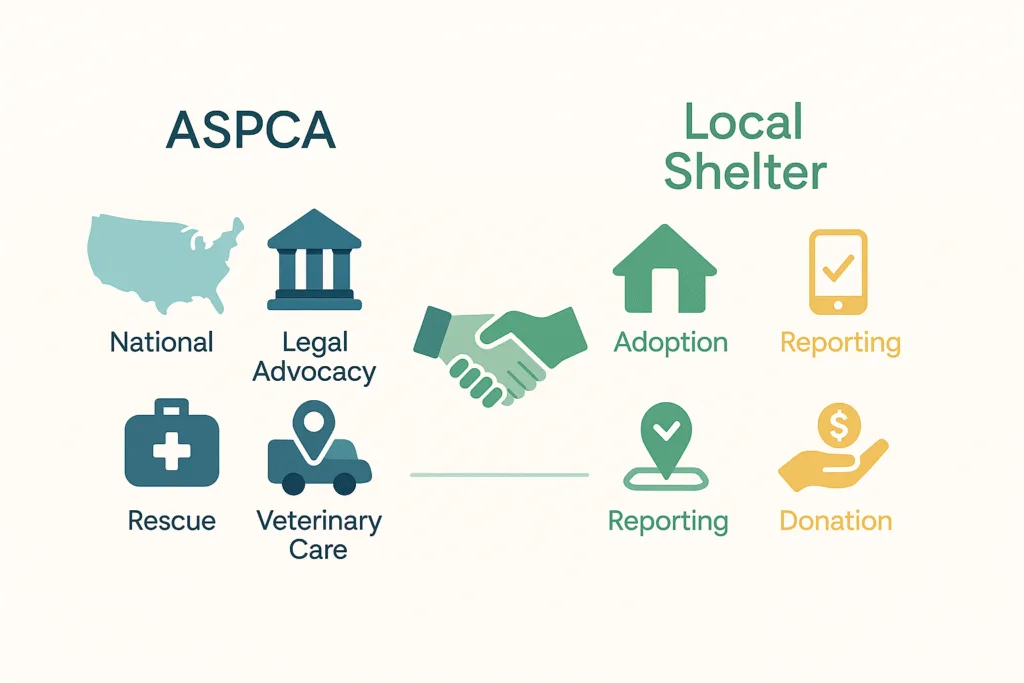
    Clean, beautiful infographic comparing ASPCA national services—legal advocacy, rescue, veterinary care—with local shelter adoption, reporting, and donation, joined by partnership icon.
    What makes the ASPCA different from a local animal shelter?

    The ASPCA is a national nonprofit that operates rescue, veterinary, legal advocacy, and emergency response programs—far beyond the scope of a single shelter.

    Is the ASPCA the same as my local humane society?

    No. The ASPCA and local humane societies are separate organizations, though they may partner on adoption events or regional rescue efforts.

    How do I report animal cruelty?

    In New York City, contact the ASPCA directly. In other areas, report to your local animal control agency or law enforcement department.

    Are donations to the ASPCA tax-deductible?

    Yes. The ASPCA is a 501(c)(3) nonprofit, and donations are fully tax-deductible as allowed by law.

    Can I adopt a pet directly from the ASPCA?

    Yes. You can search available pets and apply online at https://www.aspca.org/adopt-pet.

    Does the ASPCA provide veterinary services to the public?

    Yes. In cities like New York and Los Angeles, the ASPCA offers community clinics and mobile services that provide low-cost or free care to eligible pet owners.

  • Animal Legal Defense Fund

    Animal legal protection, shield and justice scales conceptual illustration, painterly style, editorial AVIF.

    The Comprehensive Guide to the Animal Legal Defense Fund: Mission, Lawsuits, Careers & How to Help

    The Animal Legal Defense Fund (ALDF) is the nation’s premier legal advocacy organization dedicated to protecting the rights of animals. Unlike shelters and rescues, ALDF operates through the courts and legislatures—filing lawsuits, crafting legislation, and training future animal law professionals.

    • What does ALDF do and why is it unique?
    • What kinds of cases does ALDF take on and win?
    • How do I start a career in animal law or connect as a student?
    • What tools and resources can I use if I want to help animals now?

    This guide covers everything you need to know about how ALDF uses the law to protect animals. You’ll explore how they operate, the kinds of cases they handle, how students and professionals can work in animal law, and how everyday advocates can take action right now using ALDF’s public resources.

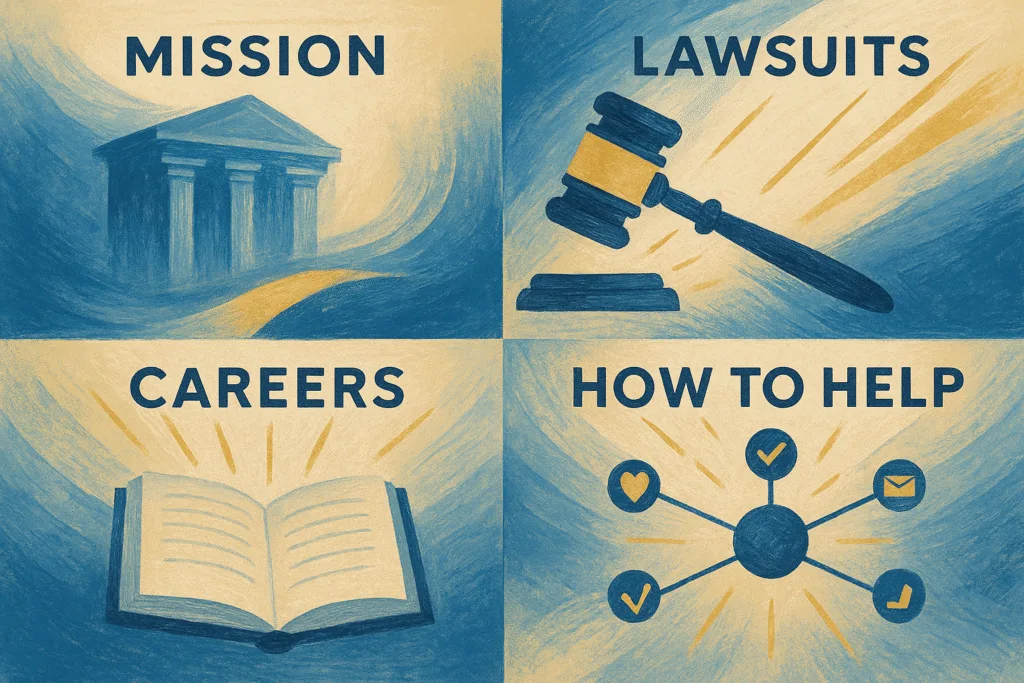
    Animal Legal Defense Fund infographic showing mission, lawsuits, careers, and ways to help; painterly editorial AVIF.

    Inside the Animal Legal Defense Fund: Legal Power for Animal Protection

    These four sections answer the most common questions people have about ALDF—from what they do, to how you can turn your passion into a profession, to what tools exist if you need to help an animal today.

    What Does the Animal Legal Defense Fund Do, and Why Is It Different?

    ALDF is not an animal rescue group—it’s a legal advocacy nonprofit. It protects animals by filing lawsuits, helping prosecute cruelty cases, and strengthening laws. What sets it apart is its courtroom-first strategy and its ability to influence national policy.

    What Legal Cases Does ALDF Handle?

    ALDF has fought cases involving factory farms, puppy mills, dogfighting rings, and wildlife trafficking. Its victories help shape U.S. law and prevent future cruelty. From precedent-setting court decisions to grassroots legal aid, they’re winning major battles for animals.

    How Can I Start a Career in Animal Law or Get Involved as a Student?

    Whether you’re in law school, considering a legal career, or looking to specialize, ALDF offers fellowships, externships, and law student chapters. Their resources help students and early-career lawyers become part of a growing field with real impact.

    How Can I Help Animals with ALDF’s Resources (Even If I’m Not a Lawyer)?

    Not a lawyer? No problem. ALDF provides advocacy toolkits, guides for reporting cruelty, and action alerts to contact lawmakers. You can also donate, join campaigns, or organize your own events. Their public resources are designed to make advocacy easy and accessible.

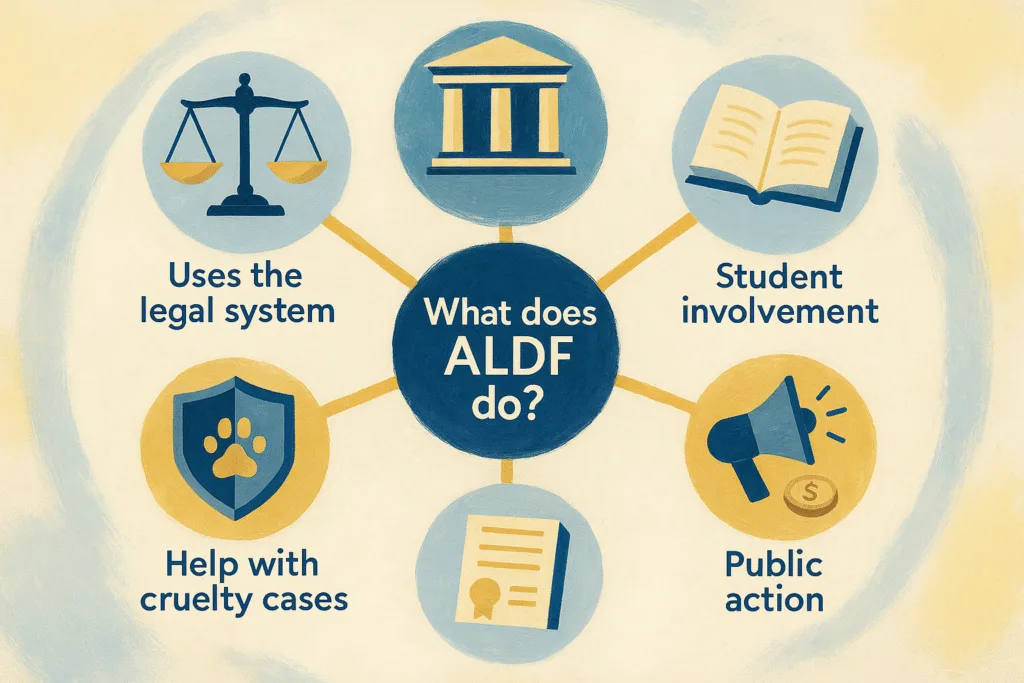
    Animal Legal Defense Fund FAQ infographic with branching icons for legal system, advocacy, students, public action, cruelty help.

    FAQs

    What does the Animal Legal Defense Fund do?

    It uses the legal system—lawsuits, legislation, and training—to protect animals.

    How is ALDF different from a shelter or rescue group?

    ALDF uses courts and laws, not kennels or adoption centers, to change how animals are treated.

    Can I work with ALDF as a student?

    Yes. ALDF supports law student chapters, externships, and legal fellowships.

    I’m not a lawyer. How can I help?

    You can use ALDF’s reporting guides, advocacy kits, and donate or join public campaigns.

    Does ALDF help with local animal cruelty cases?

    They offer legal assistance to prosecutors and have public resources you can use to report cruelty.

    The Law Is a Powerful Tool—Use It for Animals

    Whether you want to change the law, launch your legal career, or just help stop cruelty, the ALDF has tools and pathways for you. Explore your next steps today and start making a legal difference for animals.

  • American Civil Liberties Union

    Abstract fine-art digital illustration symbolizing ACLU advocacy: luminous blue and gold arches with radiant light and flowing forms.

    The Ultimate Guide to the ACLU: Services, Rights Protection, and How to Get Involved

    Abstract infographic illustration: four glowing arcs radiate from a central path, symbolizing ACLU services, rights, and ways to get involved.
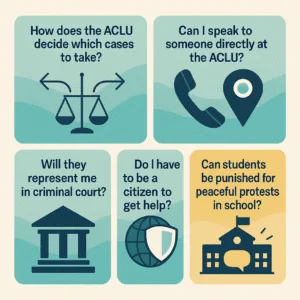
    ACLU FAQ infographic showing abstract icons and panels for legal case selection, contact, eligibility, court focus, and student protest rights.
    How does the ACLU decide which cases to take?

    They prioritize cases with potential for wide legal impact, often involving systemic injustice or unconstitutional policies.

    Can I speak to someone directly at the ACLU?

    Yes. Use the affiliate directory to find your state’s contact info and office hours.

    Do I have to be a citizen to get help?

    No. The ACLU protects civil liberties for all people in the U.S., regardless of immigration status.

    Will they represent me in criminal court?

    Not usually. The ACLU focuses on civil liberties issues, not criminal defense—unless the case affects broader rights, like freedom of speech or protest.

    Can students be punished for peaceful protests in school?

    No. Under Tinker v. Des Moines, students retain First Amendment rights in schools unless it causes major disruption.