
Cognitive Dissonance: Stop Defending Lies
You feel cognitive dissonance when your beliefs, choices, and actions clash. Your mind hates that pressure. So it starts looking for a way out.
That way out is not always truth. Sometimes it is denial. Sometimes it is a polished excuse. Sometimes it is a damn lie dressed up as logic.
Cognitive dissonance matters because it does not stay private. It shapes what people buy, defend, excuse, repeat, and ignore. It lets companies soften harm. It lets institutions dodge blame. It lets AI systems repeat human contradictions with clean, confident language.
In this article
- What Cognitive Dissonance Means
- Why Facts Do Not Always Work
- How Euphemisms Hide Harm
- How To Break The Pattern
You already see cognitive dissonance everywhere. A person says honesty matters, then hides a mistake. A company cuts jobs and calls it “workforce optimization.” A system fails people and calls the damage “process improvement.”
That language is not harmless. It makes contradiction easier to swallow. It gives people and institutions a softer story so they do not have to face the harder truth.
This is how cognitive dissonance protects bad choices. It lets people keep a clean self-image while they ignore the mess in front of them. It lets institutions sound responsible while they avoid real accountability.
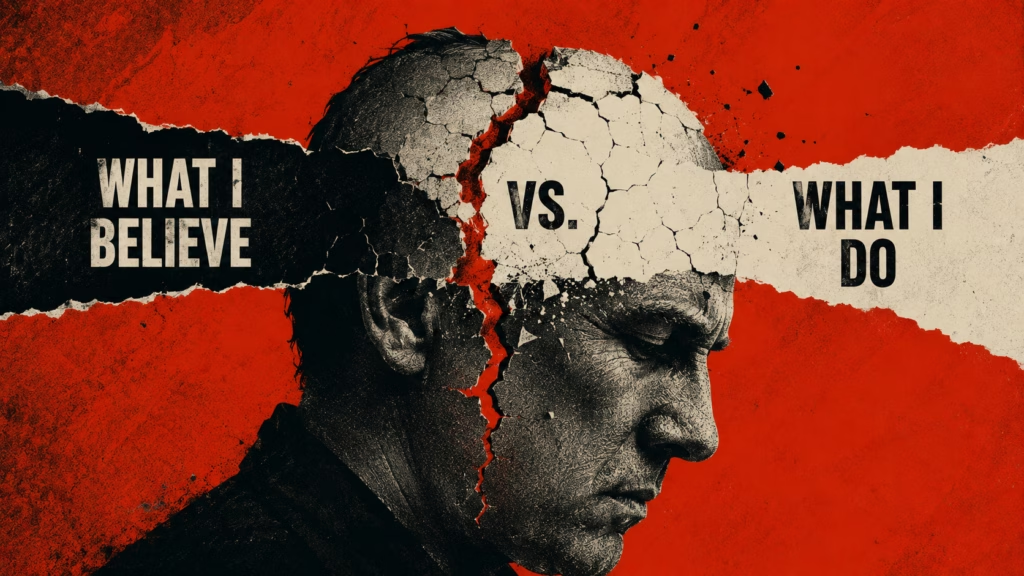
Cognitive Dissonance Is Not Harmless
Cognitive dissonance is the discomfort that appears when beliefs, values, decisions, or actions do not fit together. Your mind wants that discomfort gone. The problem is that your mind may choose comfort over accuracy.
You can resolve the conflict by changing behavior. You can change a belief. You can add a justification, downplay the problem, or avoid evidence that makes the conflict visible.
That last part matters. People do not always protect truth. They often protect identity, status, loyalty, money, and belonging.
When a belief is small, people can change it without much damage. When a belief touches character, judgment, or group identity, they get defensive fast. That is when cognitive dissonance stops looking like discomfort and starts looking like self-defense.
What Cognitive Dissonance Means
Cognitive dissonance means your mind is trying to survive a contradiction. You believe one thing, do another, and feel pressure to make the gap less painful. That pressure can lead to honesty, but it can also lead to bullshit.
A person buys an expensive product, then focuses on its best features and ignores the defects. A voter supports a policy, then treats criticism as biased or irrelevant. A worker acts against a stated value, then tells themself the situation demanded it.
The pattern is simple. The decision happens first. The explanation comes after.
That does not make every explanation false. It means your mind has a strong incentive to protect you from regret. Once you choose, your brain wants the choice to feel right.
This is why cognitive dissonance is so dangerous. It does not just affect private thoughts. It affects public choices, workplace decisions, political loyalty, consumer behavior, and institutional language.
When people refuse to examine contradiction, they help broken systems stay alive. They protect the story instead of the humans affected by the story. That is not growth. That is avoidance with better vocabulary.
Why Facts Do Not Always Work
Facts should matter. But cognitive dissonance explains why facts do not always change minds. Evidence works best when the belief is weak and the person can revise it without losing identity.
When a belief protects status, loyalty, or self-image, facts feel like a threat. People do not just hear a correction. They hear an attack on who they are, where they belong, and what they already defended.
That is why someone may double down when evidence appears. They are not only arguing about a claim. They are protecting the version of themselves that made the claim feel safe.
This shows up in politics, workplaces, purchases, public relations, and AI ethics. People reject evidence when accepting it would mean admitting poor judgment. They dismiss criticism when criticism threatens their place in a group.
That reaction has consequences. A person can keep buying into a weak claim. A company can keep selling a polished story. A public system can keep hiding failure behind softer language.
You cannot fix that with facts alone. You have to expose what the belief is protecting. Until that happens, evidence can bounce off the person and strengthen the defense.
Cognitive dissonance turns discomfort into a shield. It lets people confuse certainty with courage. It lets them call avoidance “principle” and call accountability “hostility.”
That is how bad ideas survive. They do not always win because they are strong. They survive because people fear what will happen if they let them go.
How Euphemisms Hide Harm
Euphemisms are one of the dirtiest tools cognitive dissonance uses. They do not remove harm. They make harm sound clean enough for people to tolerate.
“Collateral damage” hides injured humans. “Enhanced interrogation” hides abuse. “Downsizing” hides people losing work. “Negative patient outcome” hides the human consequence behind sterile language.
The words change the picture before the facts get examined. That is the whole trick. If the language sounds calm, the action starts to feel less brutal.
Institutions know this. They use soft phrases because plain language creates pressure. If people can clearly see who acted, who benefited, who got hurt, and who answers for it, they may demand consequences.
That is why a layoff becomes a reduction in force. Then it becomes workforce optimization. Then it becomes strategic restructuring. Each phrase does the same job: it moves attention away from people and toward process.
A harmful action becomes a “trade-off.” A failed project becomes a “learning opportunity.” A preventable risk becomes an “operational challenge.”
Some of those phrases may contain partial truth. That does not make them safe. When language hides the people carrying the cost, it protects the people making the decision.
AI ethics faces the same danger. AI systems train on human language, and human language carries patterns of bias, omission, blame avoidance, hierarchy, politeness, and institutional spin.
So when organizations call AI “responsible,” “fair,” “aligned,” “transparent,” or “human-centered,” you should not accept the words alone. Ask what they mean. Ask how they get tested. Ask what happens when the system causes harm.
A review process does not prove responsibility. A policy document does not prove safety. A polished ethics statement does not prove that people are protected.
Large language models can learn, repeat, and amplify harmful social bias. The deeper risk is not only that AI makes mistakes. The deeper risk is that AI can make contradiction sound coherent.
It can turn weak accountability into confident language. It can turn uncertainty into fluency. It can help institutions sound clean while the underlying harm remains unresolved.
That is why AI ethics needs definitions, audits, evidence, plain reporting, and accountability. Not vibes. Not branding. Not another glossy paragraph about values.
How To Break The Pattern
You do not break cognitive dissonance by pretending discomfort should disappear. Discomfort is often the signal. It tells you where values, evidence, and behavior do not line up.
Start with plain language. When someone says “workforce optimization,” ask who lost work, who made the decision, what alternatives they considered, who benefited, and who took the hit.
When someone says “AI safety process,” ask what harms they tested, what evidence they reviewed, what failures they found, and what changed after the review. If they cannot answer clearly, the process may protect the institution more than the people.
You also need to separate identity from conclusion. A belief can change without making the person who held it worthless. But when people treat revision as humiliation, they create perfect conditions for denial.
Slow down after major decisions. Purchases, votes, hires, investments, and policy commitments all create pressure to justify themselves. That pressure will push you toward the story that hurts least.
Write down why you made the decision. Write down what evidence challenged it. Name the uncertainty that remains. Define what would make you change course.
That last step matters because cognitive dissonance thrives in vagueness. It hates records. It hates clear tests. It hates direct questions.
You reduce its power by forcing the contradiction into the open. You name the actor. You name the action. You name the evidence, benefit, harm, and accountability.
That is how you stop letting language do the hiding. That is how you stop letting people call harm a process. That is how you stop letting institutions sell you comfort while someone else pays the cost.
FAQs
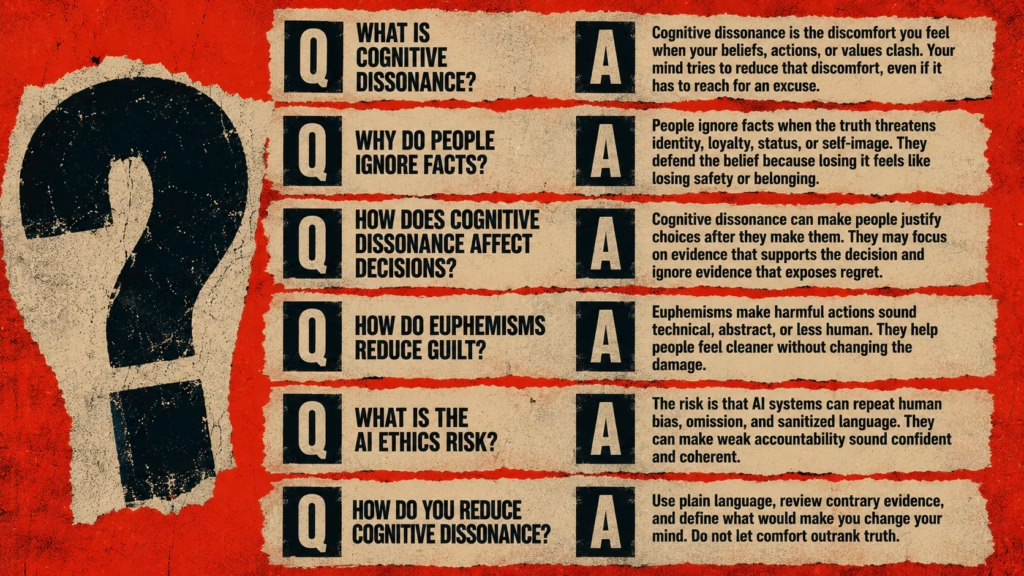
Cognitive dissonance is the discomfort you feel when your beliefs, actions, or values clash. Your mind tries to reduce that discomfort, even if it has to reach for an excuse.
People ignore facts when the truth threatens identity, loyalty, status, or self-image. They defend the belief because losing it feels like losing safety or belonging.
Cognitive dissonance can make people justify choices after they make them. They may focus on evidence that supports the decision and ignore evidence that exposes regret.
Euphemisms make harmful actions sound technical, abstract, or less human. They help people feel cleaner without changing the damage.
The risk is that AI systems can repeat human bias, omission, and sanitized language. They can make weak accountability sound confident and coherent.
Use plain language, review contrary evidence, and define what would make you change your mind. Do not let comfort outrank truth.
Cognitive Dissonance Ends When Accountability Starts
Translate one belief, policy, product claim, or AI promise into plain action, then name the actor, evidence, benefit, harm, and accountability.
More on Cognitive Dissonance
Explore Cognitive Dissonance from every angle: