
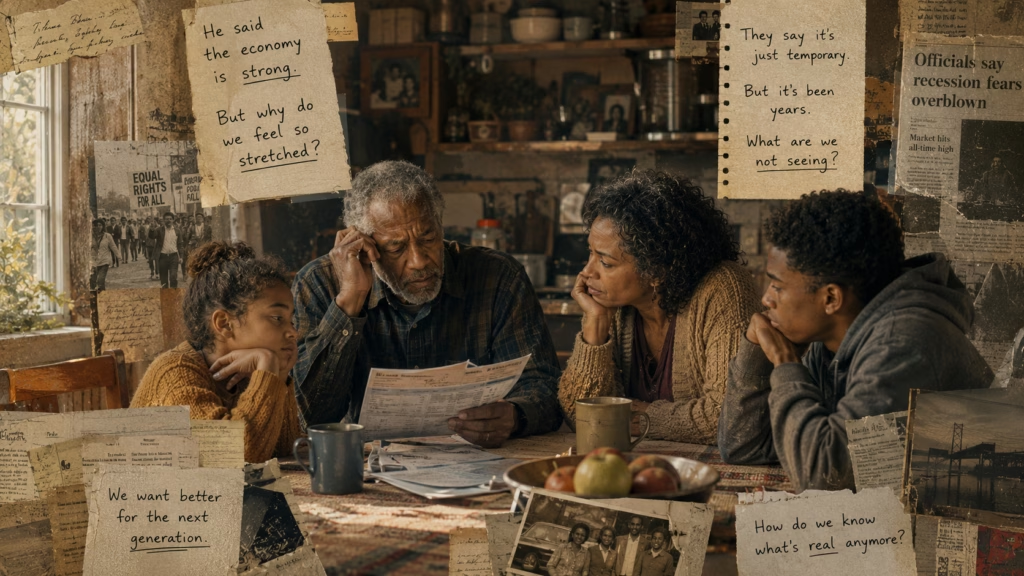
Cognitive Dissonance: Why People Explain Away Contradictions
Cognitive dissonance had often begun quietly, inside a person who had tried to keep belief, action, and self-image together. He may have valued honesty and still hidden a mistake. She may have believed in fairness and still accepted a decision that harmed another family. We had seen that private strain become a shared social story when facts threatened identity, loyalty, friendship, money, or belonging.
In this article
- What cognitive dissonance did to belief.
- Why people used softer words for hard facts.
- How AI ethics repeated human contradictions.
- How people reduced cognitive dissonance together.
In many homes, workplaces, and public conversations, cognitive dissonance had not looked like obvious hypocrisy. It had looked like a person trying to protect a stable story about himself or herself. A father who bought an expensive product may have focused on its best features after the purchase, while a friend who supported a policy may have treated criticism as unfair or incomplete. The decision had come first, and the explanation had followed.
That pattern mattered because dissonance had not stayed inside private thought. It had shaped consumer choices, political identity, institutional language, public relations, and the way communities interpreted evidence. A company could describe layoffs as workforce optimization, while a public system could call failure process improvement. The contradiction remained, but the words helped people live beside it.

The shared story behind explained contradictions.
Facts had often changed weak beliefs, but they had not always changed beliefs tied to identity. When a belief had protected someone’s place in a family, friendship group, workplace, political circle, or social community, correction could feel like rejection. He or she was not only revising an idea. The person was risking pride, trust, status, and a place among other people.
What cognitive dissonance did to belief.
Cognitive dissonance had described the discomfort created when beliefs, values, decisions, or actions did not fit together. A person may have believed one thing, done another, and then felt pressure to make the conflict feel less severe. He may have changed behavior, changed belief, added a justification, minimized the problem, or avoided information that made the conflict visible. We had learned that the mind often chose the least painful explanation before it chose the most accurate one.
This had been easy to see in ordinary decisions. Someone who bought an expensive product may have later praised its best features and ignored defects. Someone who supported a public policy may have reinterpreted criticism as biased, incomplete, or irrelevant. Someone who acted against a stated value may have decided the situation had been exceptional.
The pressure had grown stronger when the belief touched character. A minor preference could be revised without much fear, but a belief about being honest, careful, loyal, or intelligent carried more weight. A contradiction about character could feel threatening because it suggested poor judgment or moral failure. We had seen anxiety rise when a fact seemed to question who a person had been.
That was why facts alone had not always changed minds. Evidence could correct a misunderstanding when little social meaning was attached to it. But when the belief protected belonging, evidence could feel like danger. The person may have sounded certain, yet that certainty had often carried fear underneath it.
Why people used softer words for hard facts.
Language had been one of the main ways people softened dissonance. A euphemism did not erase reality, but it changed the emotional picture before people looked closely at the facts. Terms such as collateral damage, enhanced interrogation, downsizing, negative patient outcome, and content moderation error created distance from human consequences. A painful event became easier to discuss because the person harmed by it became harder to picture.
This had happened often in institutions. A layoff became a reduction in force, then workforce optimization, then strategic restructuring. Each phrase made a concrete human event sound like a calm administrative change. A mother, father, neighbor, or friend may have lost work, but the language moved attention away from that family story.
Consumer behavior had shown the same pattern in a smaller social space. The source text noted that people often rated a product more favorably after buying it than before buying it. The purchase itself became evidence that the choice had been wise. The mind had tried to protect the buyer from regret, especially when money, status, or self-image had been involved.
Institutions had used similar moves at larger scale. A harmful action became a trade-off. A failed project became a learning opportunity. A preventable risk became an operational challenge. These phrases may have carried partial truth, but they could also reduce pressure for accountability.
The problem had not been that every softened phrase was false. The problem was that soft language could make harm feel smaller before anyone had named who acted, who benefited, who lost, and who carried the cost. We had seen how a group could preserve a positive image while a person outside the room absorbed the damage. In that gap between phrase and consequence, cognitive dissonance found room to survive.
How AI ethics repeated human contradictions.
Cognitive dissonance became easier to exploit when someone understood what people needed to believe about themselves. Marketing often reassured a buyer after a purchase with phrases about quality, expertise, limited availability, or membership in a more informed group. The product may not have changed, but the buyer’s story about the purchase had become more comfortable. A private decision had been turned into a social identity.
Politics, public relations, and institutional communication had worked through the same emotional pressure. A group could describe disagreement as betrayal, criticism as weakness, or correction as hostility. Once belief became tied to belonging, changing that belief threatened a relationship. A person was not only reconsidering a claim; he or she was wondering whether a friend group, workplace role, or community bond would survive the change.
AI ethics had added another layer because AI systems had been trained on human language. Those systems had not only learned grammar and style. They had also learned patterns of explanation, omission, hierarchy, politeness, blame avoidance, and institutional framing. A model trained on language that normalized contradiction could reproduce that contradiction in polished form.
That concern had mattered when organizations described AI systems as responsible, fair, aligned, transparent, or human-centered without clear definitions or measurable evidence. Those words could be useful when they were tied to testing, documentation, and accountability. They could also become ethical euphemisms when they covered unresolved harm. A system may have been called responsible because a review process existed, even when that process did not prevent foreseeable damage.
The source text described a 2024 survey in Computational Linguistics that found large language models could learn, perpetuate, and amplify harmful social biases. The ethical risk was not only that AI systems made mistakes. It was also that AI could make contradictions sound coherent, confident, and socially acceptable. We had seen why clear definitions, independent evaluation, audit trails, and plain-language reporting mattered in AI ethics.
How people reduced cognitive dissonance together.
Reducing cognitive dissonance had not meant removing discomfort from human life. Discomfort had often been the first signal that stated values, available evidence, and actual behavior had drifted apart. A person, family, workplace, or public group did not need perfect consistency. We needed better habits for noticing when comfort had been protected at the expense of accuracy.
One helpful habit was translating abstract language into plain action. Instead of accepting workforce optimization, a group could name who lost work, who made the decision, what alternatives had been considered, who benefited, and who absorbed the cost. Instead of accepting AI safety process, a reviewer could name what harms were tested, what evidence was reviewed, what failures were found, and what changed after the review. The human story returned when plain action replaced polished phrasing.
Another habit was separating identity from conclusion. A belief could be revised without making the person who held it foolish or corrupt. This had been especially important in public debate, workplaces, families, and technical governance. When changing a position became humiliating, people became more likely to defend weak claims.
A third habit was slowing down after major decisions. Purchases, votes, hires, investments, and policy commitments all created pressure to justify themselves. A structured review could list the evidence that supported the decision, the evidence that challenged it, the uncertainty that remained, and the conditions that would make revision reasonable. That shared practice gave people a way to change course without losing dignity.
These habits had also made accountability more social. A friend could help another friend notice a gap without turning the conversation into shame. A family could discuss a hard choice without pretending every past decision had been perfect. A workplace could name a mistake plainly and still preserve trust. In those moments, cognitive dissonance became less dangerous because honesty no longer meant exile.
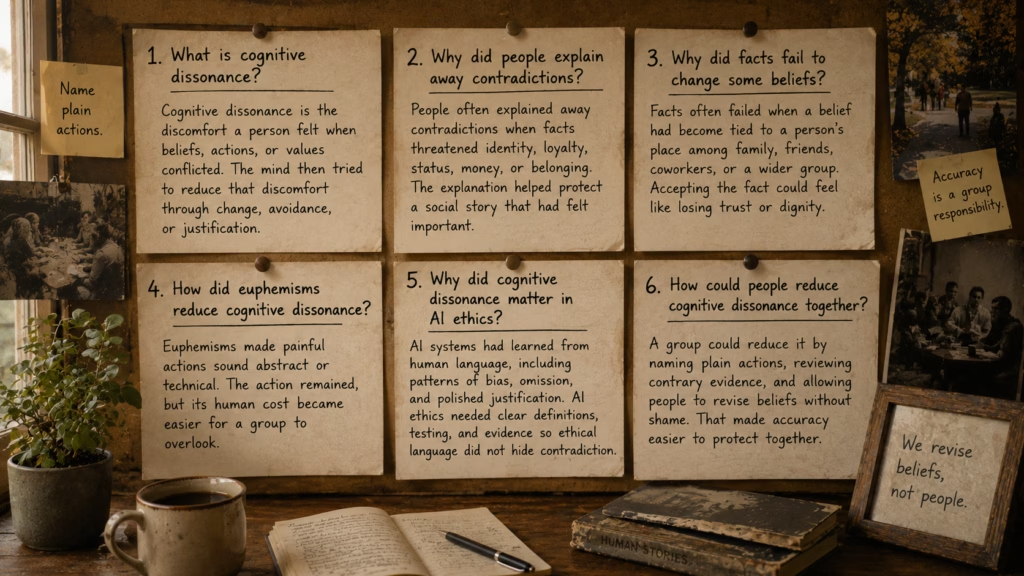
FAQs
Cognitive dissonance is the discomfort a person felt when beliefs, actions, or values conflicted. The mind then tried to reduce that discomfort through change, avoidance, or justification.
People often explained away contradictions when facts threatened identity, loyalty, status, money, or belonging. The explanation helped protect a social story that had felt important.
Facts often failed when a belief had become tied to a person’s place among family, friends, coworkers, or a wider group. Accepting the fact could feel like losing trust or dignity.
Euphemisms made painful actions sound abstract or technical. The action remained, but its human cost became easier for a group to overlook.
AI systems had learned from human language, including patterns of bias, omission, and polished justification. AI ethics needed clear definitions, testing, and evidence so ethical language did not hide contradiction.
A group could reduce it by naming plain actions, reviewing contrary evidence, and allowing people to revise beliefs without shame. That made accuracy easier to protect together.
What cognitive dissonance taught us about shared honesty.
A clearer shared life began when one belief, policy, product claim, or AI description was translated into actor, action, evidence, benefit, harm, and accountability.
More on Cognitive Dissonance
Explore Cognitive Dissonance from every angle: