
Cognitive Dissonance: Why Facts Can Fail
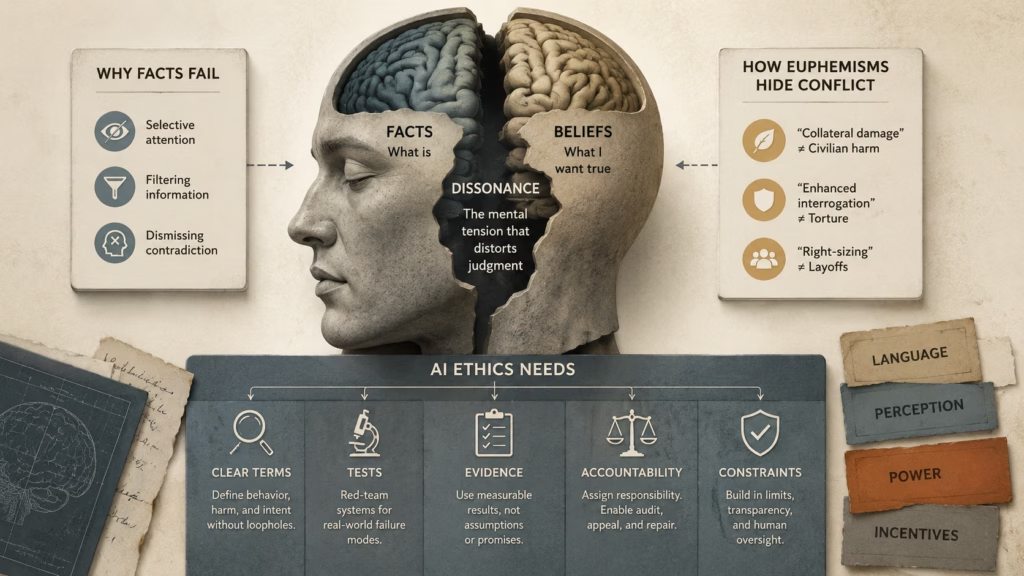
Cognitive dissonance means mental pressure from conflict among beliefs, values, decisions, actions, or consequences. The pressure appears when a claim and a reality no longer fit.
Facts do not always resolve that conflict. A belief can protect identity, loyalty, status, money, or moral self-image, making correction feel threatening instead of useful.
Language often lowers the discomfort. Euphemisms, abstract labels, institutional phrasing, and ethical branding can make contradiction sound acceptable before evidence receives full attention.
In this article
- What cognitive dissonance means.
- How euphemisms hide conflict.
- Why AI ethics needs clear terms.
- How to reduce cognitive dissonance.
Cognitive dissonance extends beyond obvious hypocrisy or deliberate dishonesty. The mechanism often operates through ordinary explanation, selective attention, softened vocabulary, and post-decision justification.
A value can conflict with conduct, and discomfort can decline through explanation rather than correction. Honesty can conflict with a hidden mistake, while justification protects a stable moral image.
Organizations use similar patterns at larger scale. Layoffs can become workforce optimization, failure can become process improvement, and harm can become a trade-off.
The contradiction remains present, but the emotional force changes. Analysis therefore requires attention to belief protection, language choices, institutional incentives, and AI-generated communication.

Cognitive Dissonance Analysis
Cognitive dissonance is a useful frame for belief resistance, euphemism, institutional messaging, and AI ethics. The concept explains why evidence can lose force when a belief protects something larger than accuracy.
The core issue is not discomfort by itself. Discomfort can reveal a meaningful conflict among stated values, available evidence, actual behavior, and visible consequence.
The larger risk appears when comfort becomes more important than examination. In that condition, language can protect contradiction, preserve identity, and reduce accountability pressure.
AI systems add a technical layer because language models learn from human communication. Polished output can repeat bias, vague ethics language, institutional self-protection, and weak accountability in fluent form.
What cognitive dissonance means.
Cognitive dissonance begins with inconsistency among belief, value, decision, action, or observable result. That inconsistency creates pressure for interpretive repair, because unresolved conflict threatens coherence and judgment. Repair can take the form of changed behavior, changed belief, added justification, minimized importance, or avoidance of conflicting evidence. Accuracy does not automatically control the outcome, especially when identity or reputation attaches to the belief.
A costly purchase gives a simple example of the mechanism. After the purchase, favorable attention can increase because regret threatens the image of sound judgment. The decision becomes evidence that the product deserved selection, and explanation follows commitment rather than preceding evaluation. The same pattern can appear in policy support, institutional loyalty, moral self-description, and consumer behavior.
Belief strength depends partly on what the belief protects. A small preference can change after correction because little identity cost exists. A belief tied to status, loyalty, money, belonging, or character creates a stronger defensive structure. In that setting, evidence can register as threat rather than correction.
Cognitive dissonance explains why facts can fail without reducing the problem to ignorance. The failure often reflects protection of coherence, not lack of information alone. Facts work best when a belief carries low identity cost and weak emotional investment. Durable correction requires attention to both evidence quality and the psychological value of the belief.
How euphemisms hide conflict.
Euphemisms reduce cognitive dissonance by changing how a difficult action sounds. The action remains, but the emotional and moral force becomes weaker. Collateral damage, enhanced interrogation, downsizing, negative patient outcome, and content moderation error all create distance from consequence. Each phrase makes a concrete event sound more abstract, technical, or administrative.
Distance matters because clear language supports accountability. Abstract language can hide agency, soften harm, and reduce pressure for correction. Euphemism does not necessarily erase reality, but it changes the mental picture before evaluation begins. The result is lower discomfort with the same underlying contradiction.
Euphemism escalation shows the pattern over time. A layoff becomes reduction in force, then workforce optimization, then strategic restructuring. Each replacement performs a similar function by converting job loss into administrative adjustment. The human consequence becomes less visible, and accountability becomes easier to postpone.
Institutions often use this language at scale. Harm becomes a trade-off, failure becomes a learning opportunity, and preventable risk becomes an operational challenge. Some terms can contain partial truth, yet partial truth can still replace clear responsibility. A trade-off requires identification of benefit, harm, alternatives, decision authority, and accountability.
Consumer decisions show a private version of the same logic. After a purchase, positive interpretation can increase because the decision requires protection from regret. The decision comes first, and the explanation comes after. Cognitive dissonance can make that explanation feel like neutral judgment.
Euphemism is therefore more than style. It is a mechanism for reducing discomfort while leaving conflict intact. Strong analysis asks whether language clarifies action, actor, evidence, consequence, and accountability. Weak analysis accepts abstraction as though abstraction equals resolution.
Why AI ethics needs clear terms.
AI ethics depends on language, standards, and evidence. Terms such as responsible, fair, aligned, transparent, and human-centered can support serious governance when connected to measurable practice. The same terms can also hide contradiction when definitions, tests, documentation, and accountability remain vague. Ethical vocabulary without operational substance can become reputational protection.
This risk connects directly to cognitive dissonance. A system can be called responsible because a review process exists, even when that review does not show harm prevention. The label reduces discomfort by making an unresolved problem sound managed. The contradiction moves from technical risk into polished institutional language.
AI systems also learn from human communication patterns. Training material contains grammar, explanation, omission, bias, hierarchy, politeness, blame avoidance, and institutional self-protection. A model can reproduce those patterns in smooth, confident output. Fluency can make weak evidence sound stronger than the underlying record supports.
The ethical danger is not only that AI can make mistakes. A deeper concern is that AI can make contradiction sound coherent. A model can summarize vague accountability with confidence, turn uncertainty into smooth language, and make unresolved claims appear settled. That capacity matters when organizations describe systems through broad ethical labels without measurable evidence.
Fairness needs definition, testing, evidence, and documentation. Transparency requires plain-language reporting, audit trails, known limits, and access to relevant evaluation results. Responsibility requires an accountable actor, a decision process, a harm review, and corrective action when failures appear. Without these elements, ethics language can protect contradiction instead of resolving it.
Bias risk shows the need for evidence discipline. The source material notes that large language models can learn, perpetuate, and amplify harmful social biases. That risk becomes harder to detect when output sounds polished, neutral, and authoritative. Clear definitions, independent evaluation, failure documentation, and audit trails reduce the power of fluency to replace accountability.
How to reduce cognitive dissonance.
Reducing cognitive dissonance does not require removing discomfort. Discomfort can function as a signal that value, evidence, action, and consequence lack alignment. The goal is accuracy rather than perfect consistency. A strong review process holds contradiction in view long enough to identify what conflicts and why the conflict matters.
Plain-action translation provides a direct method. Workforce optimization becomes job loss, decision authority, alternatives considered, benefit distribution, cost absorption, and accountability. AI safety process requires the same translation into tested harms, reviewed evidence, detected failures, changes made, unresolved risks, and available documentation. Vague language loses power when translated into actor, action, evidence, consequence, and responsibility.
Identity separation also improves revision capacity. A changed conclusion does not need to become a total judgment about intelligence, character, or institutional worth. Lower reputational cost makes weak claims easier to release. Correction becomes more available when revision does not create humiliation or status collapse.
Structured review improves decisions after major commitments. Purchases, votes, hires, investments, policies, and AI deployments all create pressure to justify the original choice. A useful review records supporting evidence, contrary evidence, remaining uncertainty, and conditions for revision. These criteria make later correction easier because the standard exists before commitment hardens.
Institutions need the same discipline. Claims about responsibility, fairness, transparency, and improvement require definitions, tests, records, and accountability. Plain language identifies the actor, action, evidence, benefit, harm, uncertainty, and accountable process. Cognitive dissonance loses power when vague language becomes concrete.
Evidence discipline also prevents language from replacing correction. Reporting should identify what happened, who made the decision, what evidence mattered, what alternatives existed, what changed, and what risk remains. AI ethics especially requires this discipline because fluent language can conceal weak governance. Clear terms make contradiction easier to see and harder to protect.
FAQs
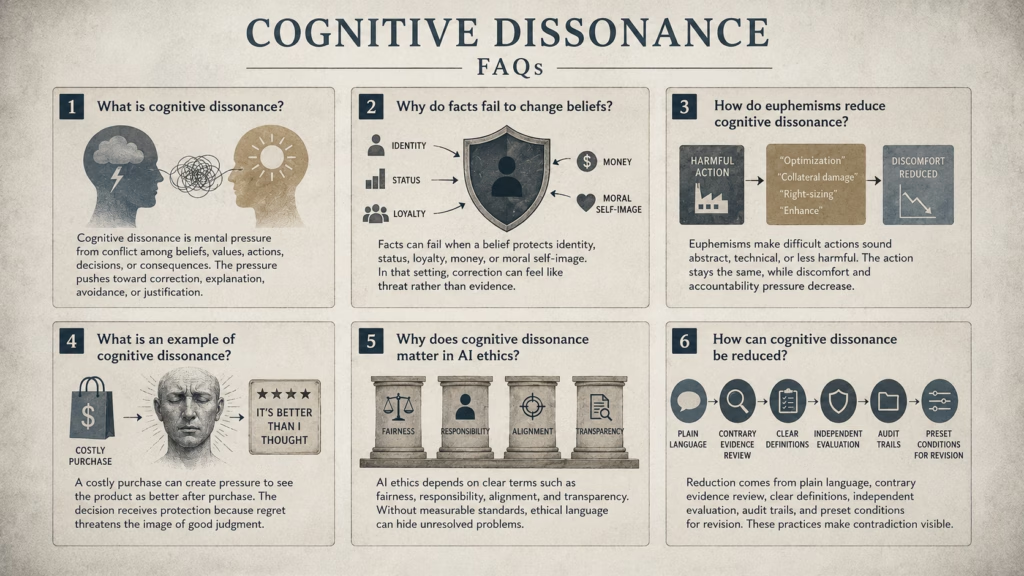
Cognitive dissonance is mental pressure from conflict among beliefs, values, actions, decisions, or consequences. The pressure pushes toward correction, explanation, avoidance, or justification.
Facts can fail when a belief protects identity, status, loyalty, money, or moral self-image. In that setting, correction can feel like threat rather than evidence.
Euphemisms make difficult actions sound abstract, technical, or less harmful. The action stays the same, while discomfort and accountability pressure decrease.
A costly purchase can create pressure to see the product as better after purchase. The decision receives protection because regret threatens the image of good judgment.
AI ethics depends on clear terms such as fairness, responsibility, alignment, and transparency. Without measurable standards, ethical language can hide unresolved problems.
Reduction comes from plain language, contrary evidence review, clear definitions, independent evaluation, audit trails, and preset conditions for revision. These practices make contradiction visible.
Cognitive Dissonance Needs Clear Language
Cognitive dissonance is a normal response to conflict between belief and reality. The risk grows when language protects that conflict from examination. Euphemisms can make harm sound harmless, failure sound productive, and weak accountability sound responsible. That pattern appears in private decisions, institutions, public messaging, and AI ethics.
Clear language reduces the risk by making contradiction visible. Evidence, definitions, audit trails, and accountability prevent polished phrasing from replacing correction. Strong analysis translates claims into actor, action, evidence, benefit, harm, uncertainty, and responsibility. Cognitive dissonance becomes less powerful when language exposes the conflict rather than covering it.
Translate one belief, policy, product claim, or AI system description into actor, action, evidence, benefit, harm, uncertainty, and accountability.
More on Cognitive Dissonance
Explore Cognitive Dissonance from every angle: