
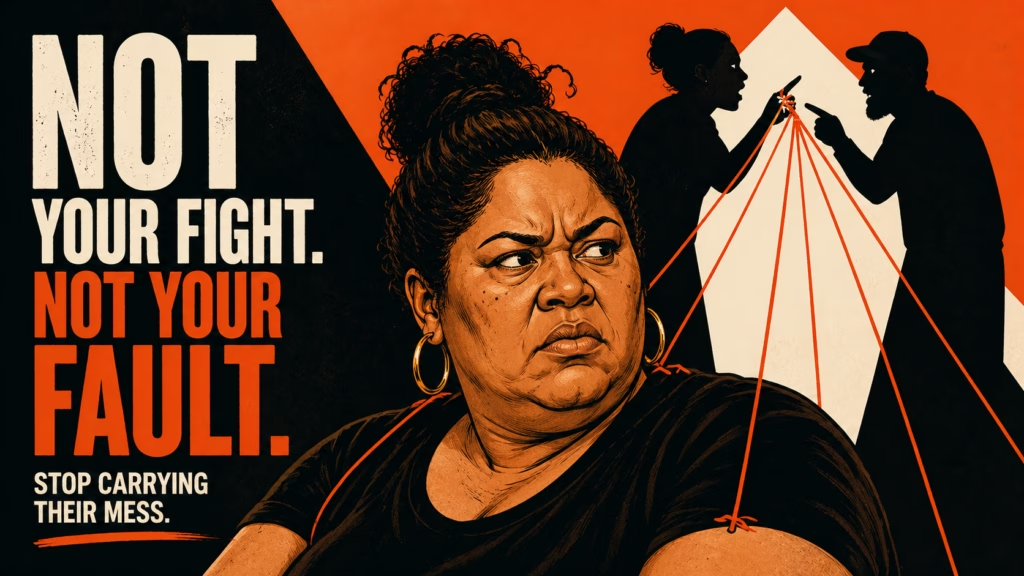
Psychological Triangulation Is a Conflict Trap
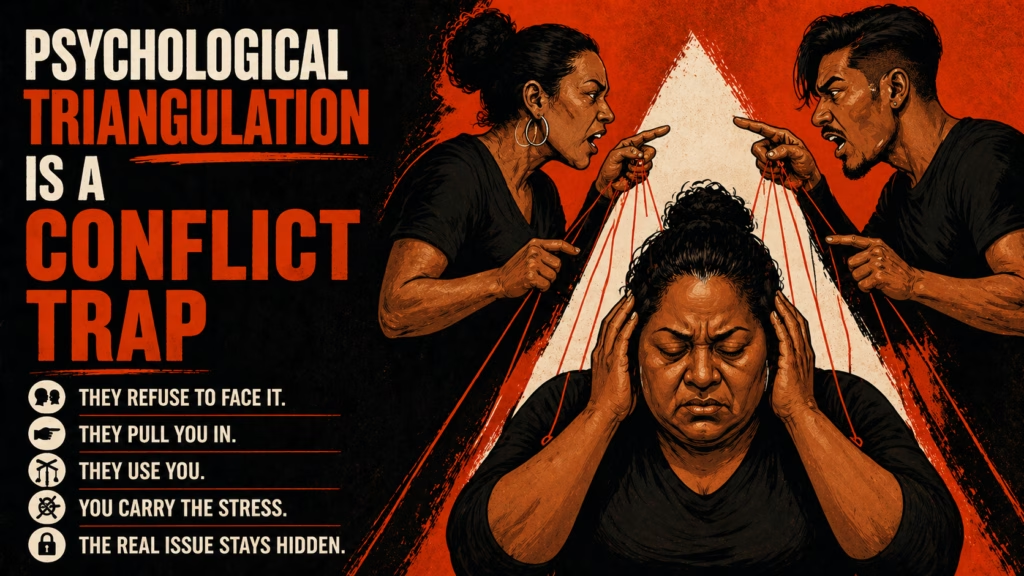
You get pulled into psychological triangulation when two people refuse to face their own conflict and shove you into the middle. They make you the messenger, referee, witness, emotional shield, spy, or proof that they are right. That is not harmless venting. That is pressure dressed up as trust.
You feel it in your body before you name it. The conversation gets tense. The story comes one-sided. The person wants your loyalty, your silence, your labor, or your anger. Then their conflict starts eating your peace.
Psychological triangulation matters because it keeps the real issue hidden. People avoid direct communication, control the story, and make another human carry stress that does not belong to them. This pattern can show up in families, romantic relationships, caregiving situations, friend groups, and workplaces. When it repeats, it can overlap with emotional abuse, coercive control, and narcissistic triangulation.
In this article
- What Psychological Triangulation Really Is
- Why People Pull You Into Their Conflict
- Signs You Are Stuck in Psychological Triangulation
- How to Stop Being Used as the Middle Person
Psychological triangulation is not ordinary support. It happens when conflict between two people gets rerouted through a third person. The third person becomes useful to the conflict instead of free from it. That is where the damage starts.
The American Psychological Association describes triangulation as conflict pulling another person into the middle, including a child caught between adults. Bowen family systems theory also treats a triangle as the smallest stable relationship system because tension between two people often pulls in a third person. That structure can lower anxiety for the person avoiding conflict while dumping fear, pressure, and confusion onto someone else.
This article names what psychological triangulation is, why people use it, how the signs appear, and how you stop becoming the messenger, judge, shield, or proof. It also separates clumsy indirect communication from control patterns that need stronger boundaries and safety support. You do not need to diagnose anyone to name the behavior. You need to stop carrying conflict that belongs to them.
Psychological Triangulation Keeps Conflict Alive
Psychological triangulation keeps conflict alive by moving it away from the people responsible for it. Instead of direct conversation, you get side-channel messages, filtered stories, comparisons, secrecy, and emotional pressure. The original issue does not resolve. It spreads.
That is why this pattern feels so exhausting. You may think you are helping, but the triangle keeps demanding more. You listen, soothe, explain, defend, repeat, or investigate. Meanwhile, the people with the actual conflict avoid the conversation they need to have.
This is the ugly truth. Triangulation turns care into unpaid conflict labor. It makes decent people feel guilty for refusing a role they never agreed to hold. It rewards the person who avoids accountability and punishes the person who notices the trap.
What Psychological Triangulation Really Is
Psychological triangulation happens when a third person gets pulled into tension between two people. That person may become the messenger, confidant, emotional shield, competitor, spy, witness, or loyalty test. The problem is not that someone asks for support. The problem starts when they use support to dodge direct communication.
Healthy support helps people speak more clearly. A therapist, mediator, supervisor, elder, or trusted advisor can help create structure and protect boundaries. Unhealthy triangulation does the opposite. It keeps people apart, controls information, and makes one person carry another person’s conflict.
You see it when one adult dumps private complaints about another adult onto a child. You see it when a partner says, “Everyone agrees with me,” instead of speaking directly. You see it when a coworker builds a side audience before addressing the person involved. In every case, they turn a two-person issue into a three-person pressure system.
The trap can feel flattering at first. They tell you things. They make you feel needed. They act like your agreement proves something. Then the pressure tightens, and you realize they did not invite you into support. They drafted you into their conflict.
Here is the clean definition. Psychological triangulation turns a two-person conflict into a three-person pressure system. You are not just hearing about the problem. They are placing you inside it. That is why it feels tense, confusing, and hard to escape.
Why People Pull You Into Their Conflict
People often pull you into psychological triangulation because direct conflict scares them. They may fear rejection, expect anger, lack conflict skills, or need emotional backup before they speak honestly. That may explain the behavior. It does not make the damage acceptable.
Some people use triangulation because it gives them power. A partner may compare you to an ex, flirt in front of you, or drag others into an argument so you feel outnumbered. An adult may use a child as a confidant or reporter. A coworker may shape opinions through private conversations instead of dealing with the issue directly.
This is where the pattern can get dangerous. The CDC defines psychological aggression as verbal or nonverbal communication meant to harm a partner mentally or emotionally or exert control. The supplied source reports that nearly half of U.S. women and men experienced lifetime psychological aggression by an intimate partner in the 2010 NISVS. That does not mean every triangulation incident is abuse. It means indirect control patterns deserve serious attention.
When triangulation becomes repeated, isolating, humiliating, or threatening, stop minimizing it. You are not dealing with awkward communication anymore. You may be dealing with a control pattern. The triangle becomes a weapon, not a misunderstanding.
The short-term payoff keeps the behavior alive. Triangulation lowers anxiety for the person avoiding direct conflict. It gives them an audience, an ally, leverage, and emotional cover. They get relief. You get the stress. The real relationship gets more distorted.
That is the cost people try to hide. They use you to manage pressure they refuse to face. They ask for loyalty while avoiding accountability. They call it support because the truth sounds ugly.
Signs You Are Stuck in Psychological Triangulation
The clearest sign of psychological triangulation is indirect communication replacing direct communication. Someone keeps speaking through another person instead of speaking to the person involved. They may ask you to deliver messages, keep secrets, collect information, soften confrontation, or confirm their version. That is not neutral. That is a role assignment.
Another sign is pressure to choose sides. Sometimes they say it directly: “Tell them they are wrong.” Sometimes they feed you one version and expect loyalty. Your response becomes a test. Your refusal becomes evidence against you.
Triangulation also creates confusion about where the real conversation is happening. One person controls the information flow, so others never compare stories directly. That breeds mistrust, resentment, and emotional exhaustion. People start reacting to fragments instead of facts.
Narcissistic triangulation uses the same structure to create jealousy, competition, insecurity, or dependence. The behavior may appear around narcissistic traits, but the pattern itself is not a diagnosis. Do not waste your energy proving a label. Name the behavior in front of you.
Use this test. Is the person with the concern speaking directly to the person involved? Are they making someone else carry emotional weight instead? Do they want your agreement more than they want accountability? If yes, psychological triangulation may already be active.
Your body may know before your brain catches up. You may feel tense, guilty, flattered, trapped, angry, or afraid to step back. That discomfort matters. When saying no makes you feel cruel or unsafe, the triangle is doing damage.
How to Stop Being Used as the Middle Person
You stop psychological triangulation by stepping out of the middle. Say, “This needs to be discussed with the person involved.” Say, “I am not carrying that message.” Say, “I cannot judge a conflict I did not witness.” Direct language cuts the side channel.
Boundaries must be specific. Refuse to carry messages. Refuse to repeat private details. Refuse to gather information. Refuse to become the emotional dumping ground for a conflict they will not face. Vague discomfort will not stop a pattern that feeds on pressure.
Children need protection from this mess. Adults must not use children as confidants, reporters, witnesses, or shields in adult conflict. Children are not emotional staff. They should not carry adult fear, anger, resentment, or blame.
Workplaces need structure when triangulation spreads. Document recurring side-channel conflict. Move concerns into direct conversations, written summaries, formal meetings, or supervisor-supported discussions. That does not make the issue colder. It makes the issue harder to distort.
When triangulation connects to emotional abuse, safety comes first. The National Domestic Violence Hotline lists warning signs such as isolation, shaming, financial control, intimidation, and threats. The supplied source also cites 2023/2024 CDC NISVS estimates that 38.6 million U.S. women and 27.3 million U.S. men experienced lifetime psychological aggression by an intimate partner. Those numbers are not background noise. They show why control patterns need serious attention.
The goal is not to win the triangle. The goal is to leave it. Direct communication, clear limits, professional support, and safety planning move conflict out of secrecy and into accountability. You can care about people without becoming the infrastructure for their avoidance.
FAQs
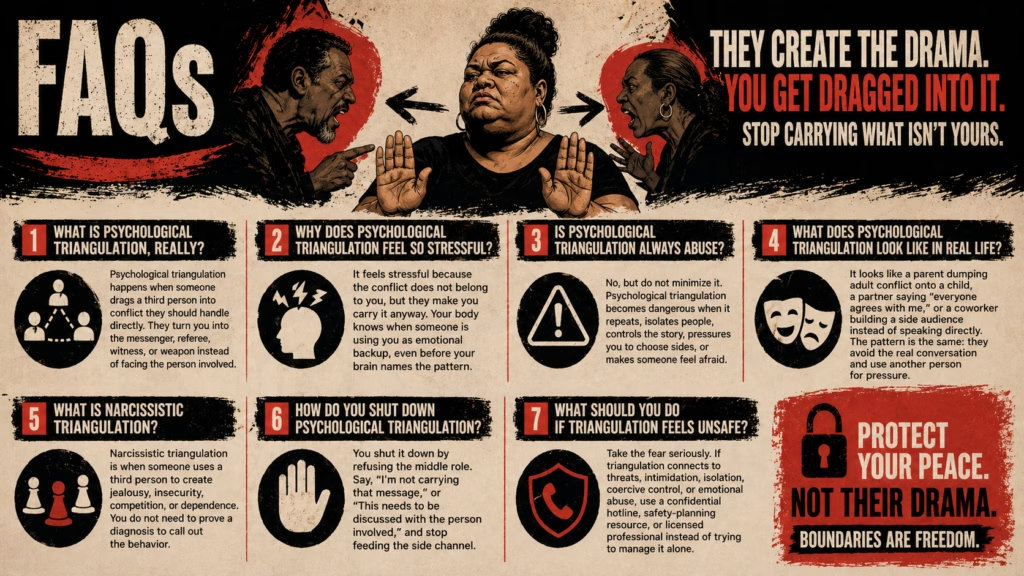
Psychological triangulation happens when someone drags a third person into conflict they should handle directly. They turn you into the messenger, referee, witness, or weapon instead of facing the person involved.
It feels stressful because the conflict does not belong to you, but they make you carry it anyway. Your body knows when someone is using you as emotional backup, even before your brain names the pattern.
No, but do not minimize it. Psychological triangulation becomes dangerous when it repeats, isolates people, controls the story, pressures you to choose sides, or makes someone feel afraid.
It looks like a parent dumping adult conflict onto a child, a partner saying “everyone agrees with me,” or a coworker building a side audience instead of speaking directly. The pattern is the same: they avoid the real conversation and use another person for pressure.
Narcissistic triangulation is when someone uses a third person to create jealousy, insecurity, competition, or dependence. You do not need to prove a diagnosis to call out the behavior.
You shut it down by refusing the middle role. Say, “I’m not carrying that message,” or “This needs to be discussed with the person involved,” and stop feeding the side channel.
Take the fear seriously. If triangulation connects to threats, intimidation, isolation, coercive control, or emotional abuse, use a confidential hotline, safety-planning resource, or licensed professional instead of trying to manage it alone.
Psychological Triangulation Stops When You Refuse the Trap
Name the conflict, identify who gets shoved into the middle, and send the next message back to the person directly involved.
Use these resources when triangulation connects to fear, threats, coercive control, intimidation, isolation, or emotional abuse.
More on Psychological Triangulation
Explore psychological triangulation from every angle: