
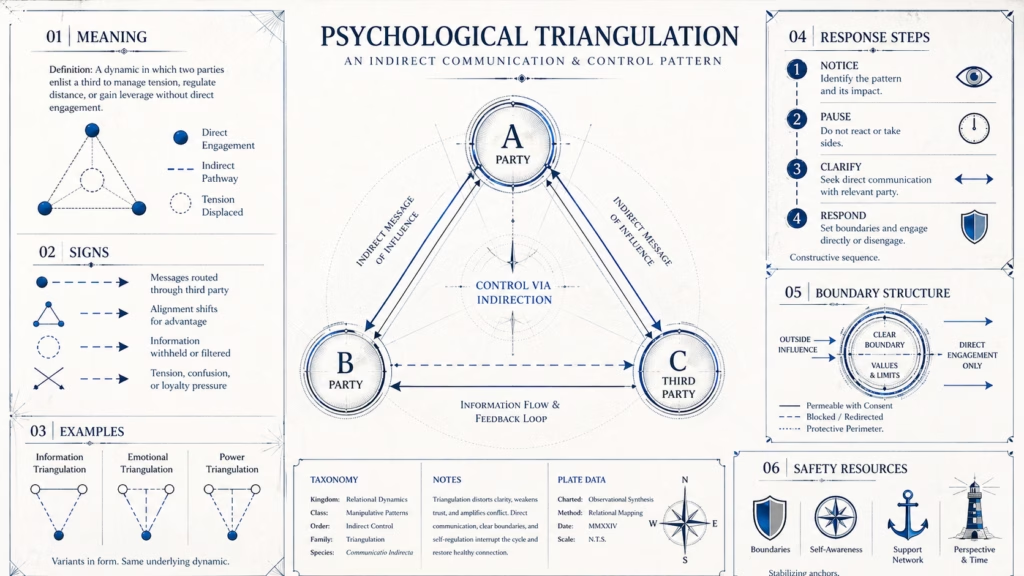
Psychological Triangulation: Meaning, Signs, and Response
Psychological triangulation describes conflict routed through a third person instead of direct communication. The pattern appears in families, intimate relationships, friendship groups, caregiving settings, and workplaces.
The core issue involves displaced pressure. A third person may become a messenger, witness, ally, referee, comparison point, spy, confidant, or proof source. This structure can hide the real conflict and increase confusion.
Supportive involvement differs from harmful triangulation. A therapist, mediator, supervisor, elder, or trusted advisor can improve clarity and safety. Harmful triangulation blocks direct accountability and keeps conflict inside side channels.
In this article
- Psychological Triangulation Meaning
- Why Psychological Triangulation Happens
- Signs of Psychological Triangulation
- How to Respond to Psychological Triangulation
Psychological triangulation can look like ordinary venting. The difference depends on function. Venting may clarify emotion, while triangulation shifts responsibility away from the direct conversation.
Family therapy describes triangulation as conflict between two family members drawing another family member into alignment. Bowen family systems theory describes the triangle as a stable relationship structure under tension.
A practical definition supports clear recognition: psychological triangulation turns a two-person problem into a three-person pressure system. Risk increases when the pattern becomes repeated, secretive, controlling, isolating, humiliating, or threatening.
The most useful analysis asks whether the third person supports direct resolution or replaces direct resolution. Healthy support moves conflict toward clarity, boundaries, and accountable discussion. Triangulation moves conflict toward partial stories, pressure, loyalty tests, and emotional displacement.
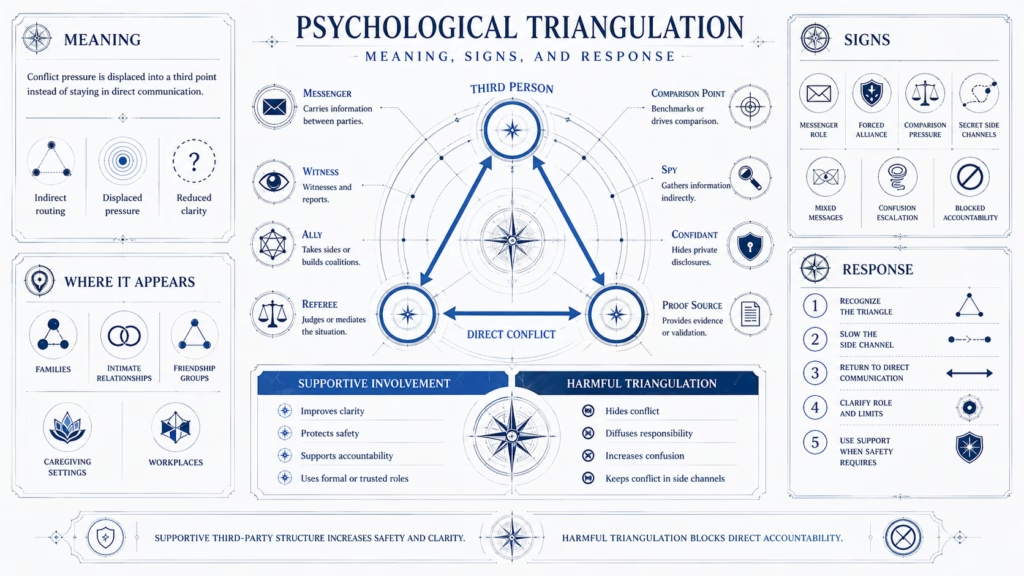
Psychological Triangulation Pattern Analysis
Psychological triangulation requires analysis of structure, motive, effect, and risk. Structure shows where the conflict belongs, who receives the pressure, and how information moves across side channels.
Motive may include anxiety reduction, conflict avoidance, reputation control, jealousy creation, loyalty testing, or coercive influence. Impact matters because indirect pressure can damage trust even without clear intent.
Effect appears through confusion, resentment, emotional exhaustion, secrecy, and repeated pressure to stabilize conflict outside the original issue. A third person may feel useful at first, then trapped inside responsibility that does not belong there.
Risk increases when triangulation appears with intimidation, financial control, isolation, shaming, or threats. In those cases, safety planning and confidential support become more important than conversation strategy alone.
Psychological Triangulation Meaning
Psychological triangulation means a third person becomes part of a conflict that primarily belongs between two people. The third person may carry messages, validate one side, absorb distress, gather information, or confirm one version of events.
The key feature involves displaced responsibility. The main concern does not move toward direct discussion. Instead, emotional pressure moves into a side channel.
Healthy support improves direct communication. Harmful triangulation prevents direct communication. This distinction separates useful mediation from avoidant or controlling conflict behavior.
A mediator or therapist can support direct conversation through structure, consent, and boundary protection. A triangulated third person usually receives filtered information and emotional pressure without authority, context, or full consent.
Common examples include a parent placing a child inside adult conflict, a partner using outside agreement during an argument, or a coworker building support before direct discussion. Each example expands conflict beyond the original issue.
Information control strengthens the pattern. One person may decide what each side hears, when disclosure happens, and which details stay hidden. This creates partial stories and unstable trust.
The third role can shift across situations. In one conflict, the third person becomes a messenger. In another, the same position becomes a witness, loyalty test, emotional shield, or silent audience.
Psychological triangulation therefore functions as conflict architecture. The third person becomes part of the system, not just a listener. The pattern stays active until direct accountability replaces the side channel.
Why Psychological Triangulation Happens
Psychological triangulation often begins with discomfort around direct conflict. Direct conversation may feel risky when rejection, anger, blame, or abandonment seems likely.
A third person can reduce anxiety in the short term. The outside position offers validation, rehearsal, protection, or emotional backup. This relief can keep the original issue unresolved.
Strategic triangulation carries a stronger control function. In intimate relationships, comparison with a former partner or public flirtation can create jealousy and insecurity. In family systems, a child may become a confidant, messenger, or reporting channel.
Workplace triangulation often appears as side-channel reputation management. A concern circulates among colleagues before direct contact with the person involved. This can create suspicion before any formal conversation begins.
Caregiving situations can also create triangulation pressure. A caregiver, family member, or support person may receive complaints, instructions, or emotional demands that belong in a direct care discussion. The result can blur responsibility and increase strain.
More harmful forms overlap with psychological aggression. The supplied source cites psychological aggression as communication intended to cause mental or emotional harm or exert control in an intimate relationship. The same source reports CDC NISVS estimates showing high lifetime psychological aggression rates among U.S. women and men.
Psychological triangulation and psychological aggression remain separate categories. The overlap matters when triangulation becomes repeated, controlling, isolating, or threatening. In that context, indirect communication becomes a possible abuse mechanism.
This distinction prevents overlabeling while preserving risk awareness. A single indirect disclosure may reflect stress or poor conflict skill. A repeated pattern of secrecy, comparison, intimidation, and side-taking pressure requires stronger boundary and safety analysis.
Signs of Psychological Triangulation
The clearest sign of psychological triangulation is indirect communication replacing direct communication. A concern moves through another person instead of reaching the person involved.
Message carrying is a common marker. The middle person may be asked to deliver information, keep secrets, gather details, soften conflict, or confirm that one side is correct.
Pressure to choose sides is another marker. The pressure may be obvious, such as requests for agreement. The pressure may also be subtle, such as one-sided disclosure that frames neutrality as disloyalty.
The middle role can feel useful at first. Over time, that role often becomes stressful because refusal may trigger blame, guilt, or loyalty pressure. Emotional exhaustion can follow repeated conflict carrying.
Information confusion also signals triangulation. Different people may receive different versions of the conflict. Direct comparison becomes difficult, and mistrust grows.
Another sign involves comparison as leverage. A partner may compare a current relationship to a former partner, a parent may compare children, or a workplace actor may compare one employee against another. Comparison becomes triangulation when it creates pressure, insecurity, or competition.
Silent witnessing can also function as triangulation. A third person may not carry a message, but presence alone becomes proof, pressure, or implied judgment. The conflict then includes an audience rather than a direct exchange.
Narcissistic triangulation describes use of a third person to create competition, jealousy, insecurity, or dependence. The phrase should describe behavior, not diagnose a person. Observable conduct matters more than labels.
A simple test clarifies the pattern. When the person with the concern avoids direct exchange and assigns emotional weight to another person, triangulation may be present. Repetition and coercive pressure increase significance.
How to Respond to Psychological Triangulation
The first response is exit from the middle role. The concern belongs in the direct communication channel or an appropriate formal support channel.
Clear boundaries reduce triangulation. Message carrying, secret keeping, private-information repetition, and conflict judging require refusal. Specific limits work better than vague discomfort.
Useful boundary structure keeps the issue with the correct parties. A response can name the concern as important while refusing the messenger position. This prevents dismissal without accepting displaced responsibility.
Family systems require adult containment of adult conflict. Children should not carry adult grievances, surveillance requests, loyalty tests, or emotional caretaking duties. This boundary protects developmental security.
Workplaces benefit from documentation and formal communication. Recurring side-channel conflict can move into written summaries, supervisor-supported meetings, or structured discussions. Documentation reduces distortion and supports accountability.
In friendship or caregiving contexts, role clarity matters. Support can include listening, resource sharing, or encouragement toward direct communication. Support should not include spying, message transfer, secret pressure, or judgment without context.
Emotional abuse or coercive control requires stronger safeguards. The National Domestic Violence Hotline lists warning signs such as isolation, shaming, financial control, intimidation, and threats. The supplied source also cites CDC NISVS estimates on lifetime psychological aggression by intimate partners.
The goal is not winning the triangle. The goal is leaving the triangle. Direct communication, formal support, clinical guidance, documentation, and safety planning can restore accountable action.
Safety planning matters when direct confrontation may increase danger. In high-risk contexts, confidential advocacy, licensed professional support, or emergency assistance may offer safer next steps than direct engagement.
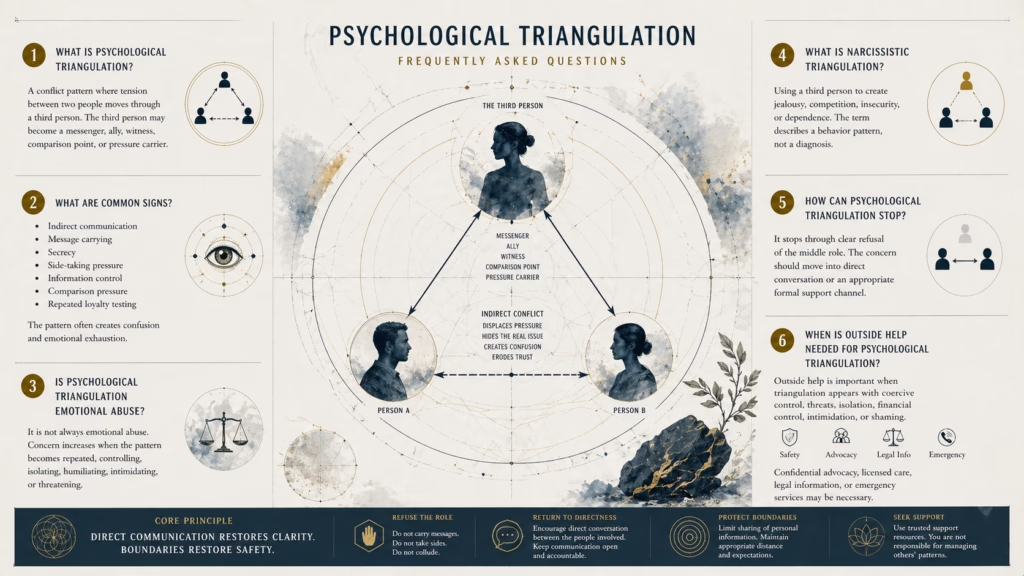
FAQs
Psychological triangulation is a conflict pattern where tension between two people moves through a third person. The third person may become a messenger, ally, witness, comparison point, or pressure carrier.
Common signs include indirect communication, message carrying, secrecy, side-taking pressure, information control, comparison pressure, and repeated loyalty testing. The pattern often creates confusion and emotional exhaustion.
Psychological triangulation is not always emotional abuse. Concern increases when the pattern becomes repeated, controlling, isolating, humiliating, intimidating, or threatening.
Narcissistic triangulation means using a third person to create jealousy, competition, insecurity, or dependence. The term describes a behavior pattern, not a diagnosis.
Psychological triangulation stops through clear refusal of the middle role. The concern should move into direct conversation or an appropriate formal support channel.
Outside help is important when triangulation appears with coercive control, threats, isolation, financial control, intimidation, or shaming. Confidential advocacy, licensed care, legal information, or emergency services may be necessary.
Psychological Triangulation Requires Direct Accountability
Map one recurring conflict, identify the middle role, and redirect the next message into a safe, direct, accountable channel.
More on Psychological Triangulation
Explore psychological triangulation from every angle: